Best Toothbrush for Braces
At a glance
- Soft or extra-soft bristles and a small head are the essentials, manual or electric.
- Electric brushes tend to remove more plaque (a Cochrane review in the general population found about 21% more after three months).
- Add one interdental tool plus one flossing method, or a water flosser.
- Replace your brush or brush head every 3 to 4 months, or sooner if the bristles fray.
We know that starting orthodontic treatment brings a lot of questions about keeping your teeth clean. Many patients come in worried about food getting stuck, plaque buildup, or how to brush without damaging their brackets. It’s completely normal to feel that way. The good news is that with the best toothbrush for braces and a few simple habits, cleaning gets a lot simpler.
Let us walk you through what actually matters when you’re choosing a toothbrush for braces. We’ll cover our picks by category (in a quick comparison table), the extra tools that reach where a brush can’t, a simple daily routine, and answers to the questions we hear most.
Why Braces Need a Different Brushing Approach
Brackets and wires create small spaces where food and plaque love to hide. A regular brush simply can’t reach where it used to, and over time that can mean irritated gums, white marks on the teeth, or even minor cavities. Those are exactly the issues we want to help you avoid so you finish with the best possible result. We notice this often with patients who start out using their everyday at-home brush.
White marks (dentists call them white spot lesions, which are really early decay) are the big one to watch. They show up around brackets when plaque sits too long, and they can linger even after the braces come off. The reassuring part is that they’re largely preventable, and it mostly comes down to the tool in your hand and how you use it.
You don’t need a lot of fancy gear. You just need a brush that reaches around the hardware without being harsh on your gums or your treatment. Three things actually matter here:
- Soft or extra-soft bristles clean well without irritating your gums.
- A small, compact head gets into tight spots and reaches the back brackets.
- A comfortable handle makes a real difference when you’re brushing after every meal.
Many braces brushes also have a V-notch cut into the bristles that helps the brush sit right over the bracket and wire.
So which brush does all of that best? Let’s compare.
Manual vs Electric Toothbrushes for Braces: Which One Works Best?
Manual toothbrushes are still a solid choice for many people. They’re affordable, they give you full control over pressure, and they travel anywhere. A soft, compact, V-notch ortho brush works well with good technique, and we’re always glad to show you how right in the chair.
That said, many patients, especially busy teens and parents, prefer an electric toothbrush once they try one. The research leans their way, though the evidence in braces wearers specifically is less certain. A large Cochrane review of people in general, not specifically braces wearers, found powered brushes remove more plaque than manual ones, around 11% more in the first few months and about 21% more after three months of use. In people wearing fixed braces, a 2026 review found powered brushing may lower plaque and gum bleeding too, though it rated that evidence as low quality. Since better plaque control is what protects you from white spots, that edge matters during treatment.
You’ll also hear the Oral-B versus Sonicare question a lot, and there’s a real trade-off worth understanding. Oral-B’s round, oscillating head wraps all the way around each bracket, and the replacement heads tend to cost less. Sonicare uses a gentler back-and-forth sonic action that many people with sensitive gums prefer, though braces can dampen those sonic waves in a few spots. There’s no single winner here, and either one works well for braces.
Whichever way you lean, look for a pressure sensor, a two-minute timer, and an orthodontic brush head shaped to fit around your hardware.
We know it’s easier to see this in action than read about it. This short video walks through the technique step by step.
Best Electric Toothbrush for Braces Review – Oral-B iO
So here are the specific brushes orthodontists tend to point people toward, by category.
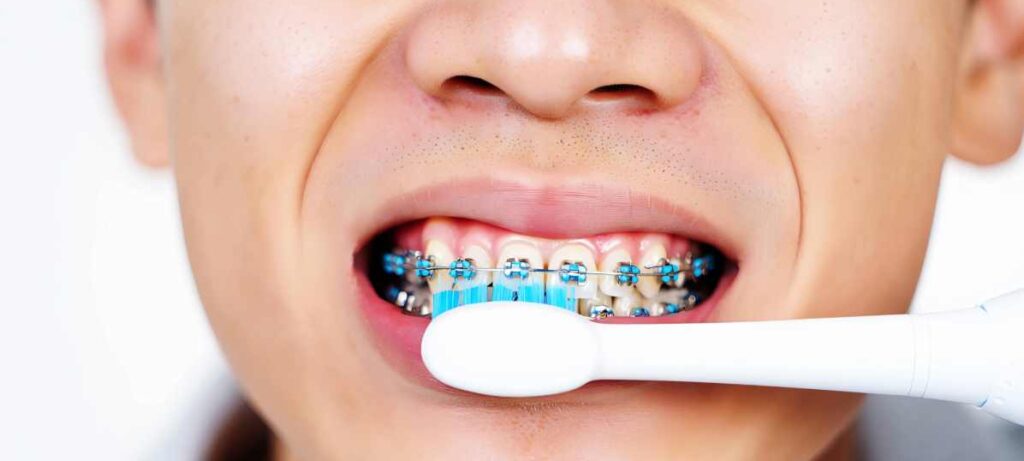
Best Toothbrushes for Braces by Category (Comparison Table)
Short on time? Here’s the shortlist. These are the kinds of brushes orthodontists generally recommend for braces, sorted by category so you can match one to your budget and your preference. We’re not selling any of these or endorsing a single brand, just pointing you toward the features that work well around brackets and wires.
| Category | Pick | Why it works for braces | Keep in mind |
|---|---|---|---|
| Best overall electric | Oral-B iO (Series 5/9) | Round oscillating head wraps around each bracket; quieter magnetic motor; pressure sensor | Premium price, pricier replacement heads |
| Best budget electric | Oral-B Pro 1000 | 8,800 strokes/min, 2-minute timer with 30-second alerts, pressure sensor, ADA Seal, usually under $50, takes the Ortho head | Fewer modes, no app |
| Best sonic | Philips Sonicare ProtectiveClean (4100/5100/6100) | Gum Care mode for gentle massage; pressure sensor; gentle feel favored for sensitive gums | Back-and-forth motion contours brackets a bit less directly |
| Best manual (specialty) | Curaprox CS 5460 Ortho | 5,460 ultra-soft filaments in a bracket-groove V-trim; compact head reaches back brackets | No timer or sensor; replace when bristles fray |
| Budget manual | GUM Orthodontic Toothbrush (#124) | V-trim soft bristles shaped around brackets, wires, and ligatures; narrow neck; costs just a few dollars | Fully manual, no feedback |
| Under-the-wire tool | TePe or GUM Proxabrush interdental brushes | Reach under the archwire and between brackets where no toothbrush can; sized to the gap | Must match the size; an extra step (more below) |
| Water flosser | Waterpik + Orthodontic Tip (OD-100E) | Tapered tip flushes plaque around brackets and under the gumline; strong option for hard-to-reach spots | Supplements brushing, doesn’t replace it; replace the tip about every 3 months |
Pick your brush type first, manual or electric, budget or premium, then let feel and price decide the rest. Honestly, any brush on this list beats the old, flared-out one you’ve had for six months. If you’re not sure, bring your current brush to your next visit and we’ll help you choose.
The right pick also shifts a bit by age. Here’s how.
Best Toothbrush for Kids, Teens, and Adults with Braces
The brush that gets your teenager to actually brush isn’t the same one that suits a 9-year-old, and neither is quite what a busy adult needs. Soft bristles and a small head stay constant across all three, but the motivation angle changes with age. Here’s what tends to work at each stage.
Kids (roughly 7 to 11). For younger kids, it helps to pick a brush that makes cleaning feel less like a chore. The Philips Sonicare for Kids uses gentle sonic vibrations, soft bristles, and an app that turns brushing into a game and helps build the habit. The Oral-B Kids brush pulses every 30 seconds to signal a quadrant change, so kids learn to cover the whole mouth. One handy bonus for parents: Oral-B Kids handles take the full range of adult replacement heads, including the Ortho head, so one brush can grow with your child as they move into braces. If you’re managing more than one kid in treatment, that simplifies the whole bathroom drawer.
Teens. Teens stick with a brush that looks good, charges overnight, and isn’t loud in a shared bathroom. A sleek rechargeable Sonicare or Oral-B fits the bill, as do quieter budget options like the usmile P10 S. Motivation is the real win at this age, and it tends to stick: in one study of 11 to 17-year-olds in braces, 92% liked using a water flosser enough to keep it up every day.
Adults. Adults usually want something efficient that fits a busy schedule, so a quiet brush, a battery that lasts, and a travel case go a long way. The Philips Sonicare DiamondClean 9400 is a gentle premium sonic option with a travel case, and the Oral-B iO is hard to beat for efficiency.
Extra Tools That Make Cleaning Around Braces Much Easier
Here’s the part a lot of people miss: no toothbrush, however good, actually reaches under the archwire. A couple of small helpers cover the spots a brush physically can’t.
Interdental brushes. These tiny bottle-brush tools slide under wires and between brackets. TePe and GUM Proxabrush both make versions built for braces, in a range of widths to match different gaps. Getting the size right matters: the brush should fit snugly without forcing, so size down if it hurts. Different gaps can need different sizes, so keep a couple on hand and we’ll confirm what fits at your next visit.
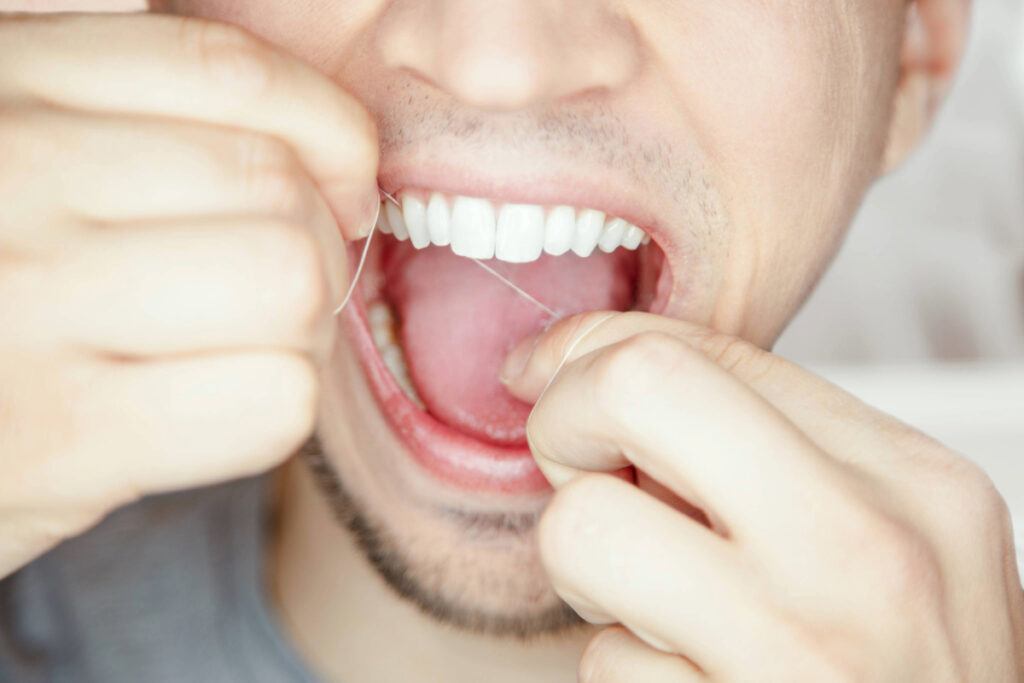
Flossing under the wire. Threading floss under the archwire is fiddly at first, so make it easy on yourself. Oral-B Super Floss combines a stiffened threader end, a spongy middle section, and regular floss in one pre-cut strand, which is a great starting point for braces, bridges, and wide gaps. Use a fresh strand for each tooth. Plain floss threaders work too if you’d rather use your own floss.
Water flosser. This one earns its own mention. A Waterpik paired with the Orthodontic Tip (OD-100E) sends a tapered stream of water around brackets and wires. In one clinical study of teens with braces, adding a water flosser removed noticeably more plaque than brushing and string flossing alone. It supplements brushing rather than replacing it, and you’ll want to swap the tip about every 3 months.
For traditional metal braces, these tools are essential. For clear aligners they’re still helpful, just less intensive. A brush, plus one interdental tool, plus one flossing method covers every surface in your mouth.
Toothbrushes and Toothpastes to Avoid with Braces
A few common buys can quietly work against you, so consider this a friendly heads-up rather than a scolding. Skip these and you’ve removed a lot of the risk.
- Medium or hard bristles. They’ve been shown to damage gums and enamel, and with braces your brackets and wires already add friction points. Go soft or extra-soft only.
- Worn or flared-out brush heads. Once the bristles splay out, they clean poorly and are more likely to catch on a wire. Replace your brush or head every 3 to 4 months, and sooner if the bristles start to fray, since braces can wear them out faster.
- Oversized brush heads. A big head can’t get into the tight spots around brackets. A compact head wins during treatment.
- Charcoal toothpaste. The particles lodge around brackets and are tough to remove, charcoal can stain the bonding adhesive holding your brackets on, and its abrasiveness wears enamel over time. It’s best to wait until your braces come off.
- Abrasive whitening pastes in general. Same abrasion concern, and braces block even coverage anyway, so whitening now can leave uneven color once the brackets come off. If you want a gentle, whitening-friendly option, a hydroxyapatite toothpaste is non-abrasive and pH-neutral, and studies suggest it can help reduce the early mineral loss that leads to white spots.
- Brushing too aggressively. Pressing hard irritates your gums and doesn’t clean any better. Let a soft brush, or an electric brush’s motion, do the work for you.
A Simple Daily Routine That Actually Works
Here’s the whole routine, start to finish, in about three minutes.
While you have braces, brush and floss after every meal, taking at least two full minutes each time you brush. A quick heads-up: brushing with braces often takes a little longer than two minutes, and that’s normal, not a sign you’re doing it wrong.
For technique, rinse with water first to loosen any food trapped around your brackets and wires. Hold the brush at about 45 degrees to the gumline and use small circles. Then angle it down onto the top of each bracket, and back up under the bracket and along the wire. Cover the outer, inner, and chewing surfaces of every tooth, spending roughly 25 to 30 seconds on each bracket area.
Then clean between the teeth with a floss threader or Super Floss, an interdental brush, or a pass with your water flosser. Finish with a fluoride mouthwash if your dentist recommends it.
The most common slip-ups are brushing too hard, missing the spots behind the back teeth, and waiting too long to replace a worn brush. Steer around those three and you’re in great shape. Consistency matters more than perfection.
The Bottom Line
The best toothbrush for braces is a soft-bristled, small-head brush that you’ll actually use correctly after every meal. Go electric if you like the extra plaque-removing power, and pair whatever you choose with one interdental tool and one flossing method so you cover the spots a brush can’t reach. Any of the picks above beats a worn-out brush, so don’t overthink the brand.
If you’re already a patient, ask us to show you the technique at your next adjustment. We’re glad to walk you through it on your own teeth, which beats any diagram. If you’re not a patient yet, take a look at our braces and Invisalign options, including braces at our Wellington office, then book a free consultation and we’ll get you set up with everything you need before treatment even starts. No pressure, no surprises. We’ve got your smile covered.
Frequently Asked Questions About Toothbrushes for Braces
Is Oral-B or Sonicare better for braces?
What bristle strength should I use with braces?
Are electric toothbrushes safe to use with braces?
How often should I replace my toothbrush or brush head with braces?
What’s the best toothbrush for kids with braces?

Dr. Jonathan Petrover is the lead orthodontist at Petrover Orthodontics, serving patients in Boynton Beach and Wellington, Florida. With a focus on personalized care and advanced treatments, he helps children, teens, and adults achieve healthy, confident smiles.