White Spots on Teeth From Braces
At a glance
- White spots are early enamel demineralization and are common with braces.
- They are largely preventable and often fade, especially when caught early.
- Remineralization comes first (fluoride, CPP-ACP), then ICON, microabrasion, or bonding.
- Genetics plays a role, so they are not always a hygiene failure.
You did everything right. You wore your braces, made it to every appointment, and the big day finally came, brackets off, new smile revealed. Then you noticed them. Small chalky patches on your enamel, right where the brackets used to sit.
White spots on teeth from braces are one of the most common things we see after treatment. The good news: they’re largely preventable, and when they do show up, there are real options. This isn’t something you’re stuck with.
Some degree of this is genuinely common, which is exactly why we watch for it. Studies vary a lot, and how common white spots look depends heavily on how carefully they’re measured. Visual-exam research finds somewhere between roughly a quarter and three-quarters of brace patients develop at least one spot (about 23.4% to 75.6% in one expert-consensus review). Highly sensitive imaging has found rates as high as 95 to 97% at the time braces come off. The honest takeaway is that some enamel change is extremely common, not a sign you failed.
Here’s what we’ll walk through: why white spots form, whether they’re permanent, how to fade them, and the treatment options from gentlest to most involved.
What Causes White Spots and Decalcification From Braces
White spots from braces aren’t caused by the brackets themselves. They’re caused by what happens around them when cleaning gets missed.
The American Association of Orthodontists puts it plainly: braces don’t cause white spots directly. The real drivers are plaque and acid sitting on enamel long enough to pull minerals out, plus insufficient cleaning around brackets and aligners and frequent sugary or acidic food and drink.
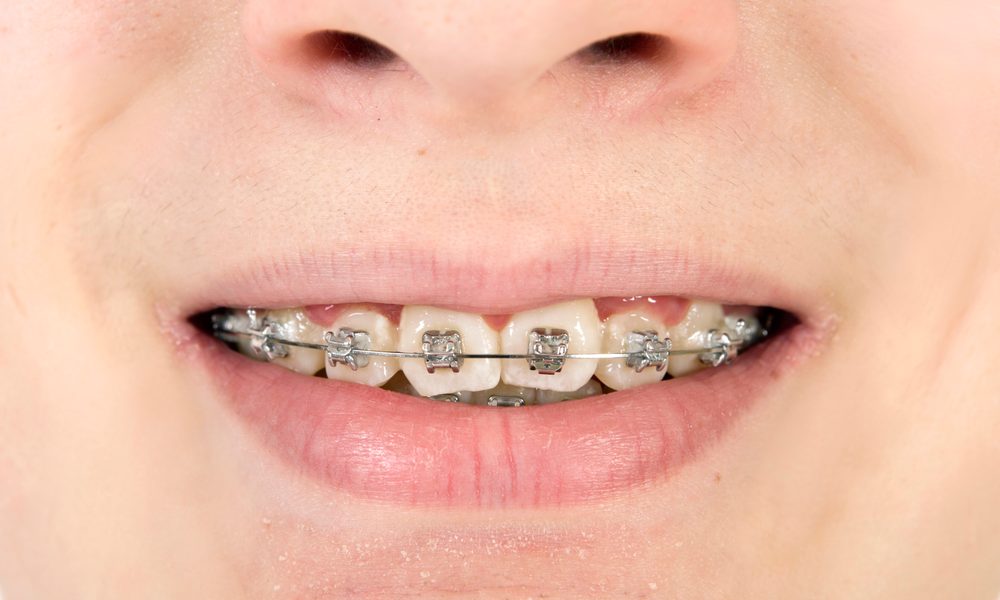
Here’s the mechanism in plain terms. Plaque, that filmy buildup on teeth, contains bacteria that produce acid. When that acid stays against enamel, it pulls out minerals like calcium. The affected area loses density and reflects light differently, creating that chalky look. The clinical term is enamel demineralization, sometimes called decalcification from braces. These early marks are called white spot lesions, and they’re the earliest, subsurface, non-cavitated stage of decay. That matters, because a shallow lesion can often be reversed before it ever becomes a cavity.
Brackets and wires create a lot of places for plaque to hide. The area just around the bracket edge is especially hard to reach, which is why white spot lesions tend to show up in a ring or square pattern right where the bracket sat. Not mysterious. Just geometry.
It’s Not Always About Hygiene
Here’s something we don’t say enough in our practice: some patients brush faithfully, use fluoride rinse, avoid soda, and still develop white spots. Genetics plays a real role. Some people’s enamel is simply more susceptible to mineral loss, no matter how careful they are.
We’ve seen patients with near-perfect hygiene come in with early white spots forming, and others we quietly worried about all treatment long walk out with clean enamel. Individual biology matters.
Kids and teens in fixed braces are the highest-risk group, so parents especially shouldn’t read spots as a verdict on their parenting. That’s not an excuse to skip brushing. But if you’re dealing with white marks after braces and you did take care of your teeth, you don’t need to feel like you failed. Sometimes it’s just how your enamel responds. Full stop.
What Prevention Actually Looks Like During Braces
The AAO’s prevention protocol is straightforward, and it works. Brush at least twice a day, ideally after meals, angling the brush toward the gumline and the edges of each bracket, not just the flat tooth surface. Clean between your teeth every day with floss, floss threaders, interdental brushes, or a water flosser. Use fluoride as your dentist or orthodontist recommends. Choose water over frequent sugary or acidic drinks. And keep your regular dental cleanings during treatment.
An electric toothbrush can make a real difference here, since the rotating head reaches spaces a manual brush often misses. Our guide on the best toothbrush for braces walks through what to look for. Flossing with braces is genuinely challenging, we know, but interdental brushes and water flossers make it manageable for clearing debris around brackets. Our oral hygiene with braces page covers the full routine in more depth.
Two things make the effort worth it. First, white spot lesions can begin forming as early as four weeks into treatment, with the sharpest increase in the first six months, so those early months are when tight home care matters most. Second, research consistently links higher brushing frequency to fewer white spots. The effort genuinely pays off.
Diet matters too. Sugary drinks, sports drinks, and acidic foods speed up decalcification, and it’s the frequency of exposure that counts, not just the amount. If your teen is sipping soda or a sports drink daily during treatment, the risk climbs quickly.
Remineralization Products Your Orthodontist May Recommend: MI Paste, Prescription Fluoride, and More
These come up a lot, so here’s the honest rundown. Think of these as questions to ask us, not a shopping list to self-prescribe. Which one fits depends on your risk, your age, and your orthodontist’s read.
- MI Paste and MI Paste Plus (CPP-ACP). These at-home creams add calcium and phosphate back to the tooth surface, and the Plus version also adds fluoride. The honest catch: the evidence is mixed. A major review found it can help some people, but isn’t backed by enough strong trials to promise results. One note for families, plain MI Paste is safe for young kids, while MI Paste Plus is not.
- Prescription high-fluoride toothpaste (like PreviDent 5000). This packs much more fluoride than a standard tube, and a journal review found it further reduces demineralization and supports remineralization. It’s prescription-only, and you’d use it twice a day in place of your regular toothpaste.
- In-office fluoride varnish. We paint this on at your appointments, usually a couple of times a year, more often for higher-risk patients. Done regularly, it helps patients develop fewer new spots. The catch is that a single one-off application doesn’t do much. It works as part of an ongoing routine, not a one-time fix.
- Nano-hydroxyapatite toothpaste. This uses the same mineral that natural enamel is made of. The evidence is still emerging, one trial found it matched or beat fluoride on remineralization, but it’s less studied long-term. It’s a reasonable fluoride-free option if you want one.
Not sure which fits your situation? A free consultation is a good place to sort it out.
If We Catch Them Early
This is something we watch for at every appointment. White spot lesions don’t appear overnight. They develop gradually, and we can often spot early enamel changes before they’re visible to you.
This is a pattern we watch for, especially with teens who sip sports drinks during long practices: faint early-stage spots starting to form partway through treatment. Caught early, those spots often respond to better home care and fluoride varnish, so the enamel can still be clean when the braces come off.
Catching white spot lesions early during treatment gives the best chance of reversal. Active, still-forming lesions are more porous and tend to respond better than long-standing ones. When we identify early demineralization, adding fluoride varnish at appointments and tightening home care can often slow or stop progression. Spots discovered only after braces come off are more likely to need cosmetic treatment.
That’s one reason keeping your appointments isn’t optional. We’re not just checking wire progress; we’re watching your enamel too. Our braces FAQs cover several related questions we hear at this stage.
Treatment Options for White Spots After Braces, From Least to Most Invasive
If white spots are present when braces come off, the guiding principle from the research is simple: start with the least invasive option and escalate only if needed. Here’s how that ladder looks.
| Option | What it does | Best for | Reverses or cosmetic? |
|---|---|---|---|
| Remineralization (fluoride, CPP-ACP) | Helps minerals redeposit in the enamel | Mild, shallow, active spots | Can truly reverse shallow spots |
| Resin infiltration (ICON) | Resin fills porous enamel; one visit, no drilling | Spots that don’t fully fade | Cosmetic + stabilizing (masks and halts) |
| Microabrasion | Polishes off a thin enamel layer to blend the spot | Very superficial spots | Cosmetic only; removes enamel |
| Professional whitening | Brightens surrounding enamel so spots blend | Mild spots, used with care | Cosmetic only; can heighten contrast first |
| Bonding or veneers | Covers the spot with composite or a veneer | Deep spots that resist the above | Cosmetic; most invasive, last resort |
Remineralization comes first for a reason. Many mild spots fade noticeably on their own in the months after debanding, with nothing more than good hygiene. So waiting and monitoring a mild case is a legitimate choice, not neglect.
ICON resin infiltration is one of the more effective in-office options we discuss when spots persist. A thin resin fills the microscopic pores causing the chalky look, with no drilling, no anesthesia, and usually a single appointment. Research shows it clearly improves how the spots look and tends to hold up well over time. It works best on shallower spots, and we’ll set realistic expectations for your case.
A word on whitening. It can help blend milder spots, but it lightens healthy enamel more than porous lesion enamel, so it can temporarily heighten the contrast and make spots look more obvious before they blend. It may also cause sensitivity. Do it under professional guidance, and sometimes other treatments come first.
Deep, established lesions are where bonding or veneers may eventually come into the picture. That’s the last resort, not where we start. Results vary by case, so let’s talk through what actually fits your teeth.
Is This Something to Worry About?
Mild white spots after braces are common, and most cases have a clear, manageable path forward.
A lot of parents feel like they somehow let this happen, especially when their teenager comes home from debanding with spots. You didn’t. Kids and teens are the highest-risk group by biology, not by parenting. These can develop even with excellent care, and there are real treatment options at every level of severity. We see this regularly, and it’s almost never as permanent as it looks on day one.
If you’re not sure where your teen’s teeth stand, we’d love to take a look. We offer free consultations at our Boynton Beach and Wellington offices. You’ll get an honest assessment and a plain-language walk-through of what makes sense, with no pressure. Learn more about our orthodontic care or reach out whenever you’re ready.
Watch: White Spots on Teeth Explained
Registered dental hygienist Whitney DiFoggio (Teeth Talk Girl) breaks down the causes, prevention, and treatment options, including ICON resin infiltration, in this clear five-minute overview.
White Spots After Braces: Frequently Asked Questions
Do white spots from braces go away on their own?
What’s the best treatment for white spots after braces?
Are white spots from braces permanent?
Can white spots turn into cavities?
How long do white spots take to fade?
Can teeth whitening make white spots worse?

Dr. Jonathan Petrover is the lead orthodontist at Petrover Orthodontics, serving patients in Boynton Beach and Wellington, Florida. With a focus on personalized care and advanced treatments, he helps children, teens, and adults achieve healthy, confident smiles.