Braces and Invisalign for Kids and Teens
Orthodontic treatment for kids and teens can include traditional braces or clear aligners, depending on their teeth, bite and stage of development. Dr. Jonathan Petrover, an orthodontic specialist for more than 20 years, treats both, starting with a free consultation.
- Orthodontic specialist for more than 20 years
- A free first consultation, a $249 value
- No hidden fees
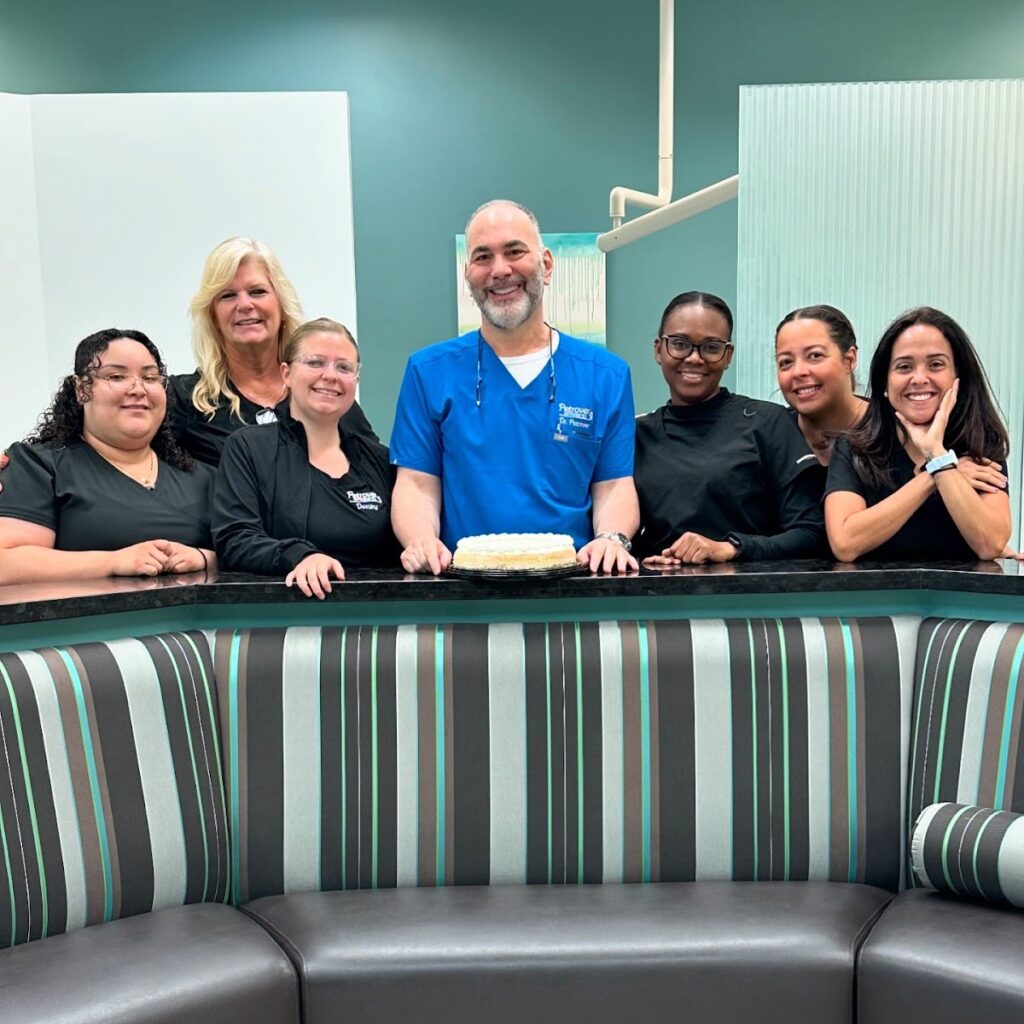
Braces for Kids and Teens with an Orthodontic Specialist
You’ll sit down with an orthodontic specialist at the very first visit. Dr. Jonathan Petrover has worked as a specialist in orthodontics for more than 20 years.
What training does Dr. Petrover have?

Meet Dr. Jonathan Petrover
- Orthodontic specialist for more than 20 years
- Specialty training in orthodontics, with Honors, at NYU in 1991
- Fellow in Craniofacial Deformities and Orthognathic Surgery in New York City hospitals
- Member of the American Association of Orthodontists, the Southern Association of Orthodontists, the South Florida Academy of Orthodontists and the Florida Association of Orthodontists
- 12 to 18 continuing-education courses a year
His interest started in his first year of dental school at NYU, where Dr. Petrover loved the growth and development course. He went on to research cleft lip and palate babies and other craniofacial patients at NYU Medical Center, and that work steered him into orthodontics.
If you’ve been searching for a pediatric orthodontist, the credential worth looking for is specialty training in orthodontics. The American Association of Orthodontists explains that an orthodontist has invested an additional 24 to 36 months after dental school learning the bite: how teeth meet, how they’re aligned, and how the jaws are positioned.
We often treat multiple members of one family at once, and we think it’s a lot of fun! As Dr. Petrover puts it, “We often see many members of the same family, and we get to know their extended families over many years…” There’s more about the practice on the Petrover Orthodontics home page.
What Makes Treatment for Kids and Teens Different Here
A lot of parents worry about being pushed: into braces before a child is ready, or into an option when another would suit them better. Here’s how we handle both.
What’s different about braces and Invisalign Teen at Petrover Orthodontics?
We offer braces and Invisalign Teen, so nobody has to pick a side before the consultation. This is what that looks like for your family:
- Both options, explained for your child. At the consultation, Dr. Petrover goes through the problems he sees, the options for correcting them, whether Invisalign Teen or braces is a better choice, when to start and how long treatment will last.
- No rush if it isn’t time yet. If Dr. Petrover recommends waiting, we’ll send you a reminder as the time approaches.
- Scans instead of goop. We take digital impressions with an iTero scanner, so there’s no tray of impression putty to bite into. Your child can watch 3D images of their teeth appear on the computer screen instead.
- A choice of brackets. Metal braces, clear ceramic braces and In-Ovation self-ligating braces, with or without colors.
- Everything included. Diagnostic records, the appliances your child needs, retainers and follow-up appointments are all included in the treatment fee. No hidden fees.
- Help when something breaks. A broken bracket, a poking wire or a lost aligner? We’ll help the same day whenever possible.
- A free first consultation. It’s a $249 value, and it includes the initial exam and digital x-rays.
The first appointment is designed to be pressure-free. Dr. Petrover and the whole team enjoy answering questions, so ask all you want, and bring your child’s questions, too.
How Braces and Invisalign Teen Work for Kids and Teens
Braces and Invisalign Teen move teeth the same basic way: gentle, steady pressure over months. What changes is what your child wears, and what they have to remember each day.
What happens at a child’s first orthodontic check-up?
The first visit is relaxed. We’ll collect the health forms (you can fill them out online beforehand), then you can stay with your child while we take x-rays and photos of their teeth. Dr. Petrover and our treatment coordinator meet with you to ask a few questions. He reviews the x-rays and photos and takes a brief look inside your child’s mouth, without instruments.
Parents are encouraged to join the conversation, because what you’ve noticed at home helps. A first exam generally covers whether there’s a problem, the treatment options, how long treatment should take and what it will cost. You’ll leave with those answers for your own child: whether treatment is needed and when to start, the options, an estimated timeline and the cost.
From there, treatment starts when Dr. Petrover recommends it, or we wait and remind you when it’s time. Either way, you’ll know where things stand. You can read more about what happens at the first visit before you book.
How do braces straighten a child’s teeth?
The wire does the work. The wire that connects the brackets puts gentle pressure on the teeth and moves them into new positions over time. That’s the basic principle behind every kind of braces. What has changed is the hardware, and we use self-ligating brackets and super-elastic wires. A self-ligating bracket, which can be made of metal or ceramic, holds the wire with a built-in clip or door. An orthodontist may also add small elastic bands for extra force to help correct the bite.
We offer metal and clear ceramic braces, plus In-Ovation self-ligating braces: In-Ovation R, which is metal, and In-Ovation C, which is clear. Patients typically choose ceramic brackets when they want braces that are less noticeable than metal ones.
Braces come with or without colors, so younger kids can pick their colors! A teen who’d rather keep things low-key can skip them. Which bracket suits your child is part of the consultation.
How does Invisalign Teen work?
Invisalign Teen uses a series of clear, removable aligners instead of brackets and wires. According to the American Association of Orthodontists, each aligner moves the teeth a fraction of a millimeter at a time, and aligners are typically worn at least 22 hours a day, coming out to eat, drink, brush and floss.
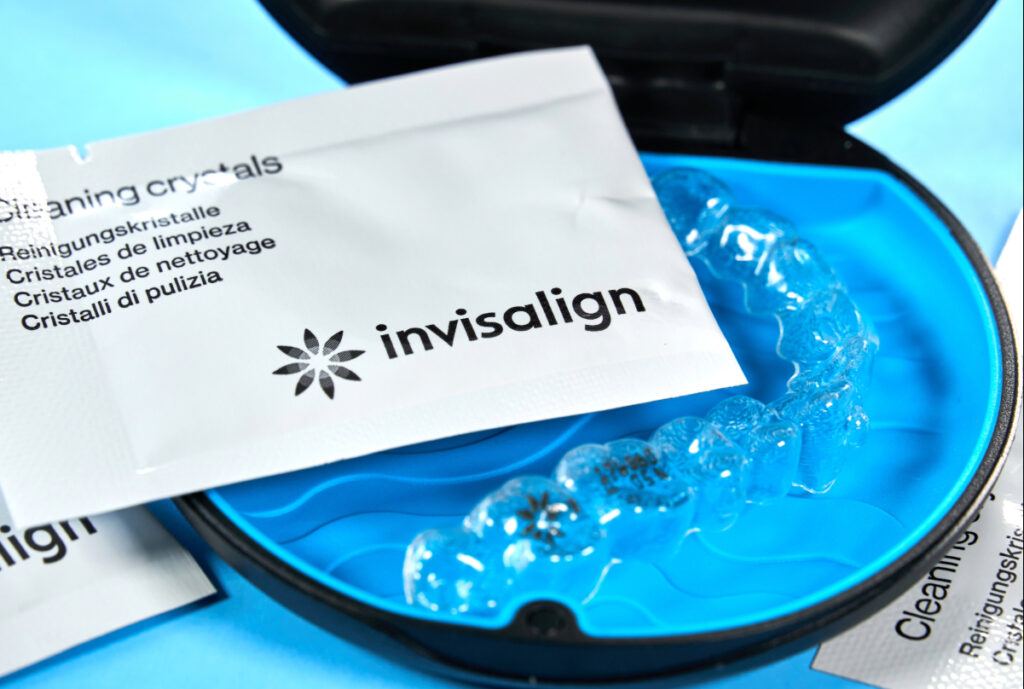
So before you choose aligners, ask yourself whether your teen will wear them that long. When your teen first starts, expect an adjustment period of about a week, and mild discomfort is common for the first few days. If an aligner goes missing or breaks, call us before switching trays, and we’ll let you know whether to wear the previous aligner or replace the missing one.
Invisalign Teen has a feature made for growing mouths: aligners that compensate for the growth of new teeth and molars. The exam decides whether aligners suit your child. There’s more on how Invisalign Teen works.
What is treatment like from start to finish?
The first few days take some getting used to. After that, it settles into a routine.
- Placement day: no shots. Teeth may feel tender or sensitive to pressure at first, and small pieces of orthodontic wax help if the braces rub the cheeks. Softer foods are easier at first, and an over-the-counter pain reliever can help if needed.
- Sore days: some tenderness is normal after an adjustment. Try a warm saltwater rinse (1 teaspoon of salt in 8 oz of warm water).
- Adjustment visits: the AAO says braces patients come in every 4 to 12 weeks for adjustments, depending on where they are in treatment.
- How long: braces usually take about 18 to 24 months, though this will vary depending on your child’s individual case.
- Daily care: brush and floss after every meal. Avoid sticky, hard or chewy foods, because breakages mean extra visits and a longer treatment. (Yes, that means the Skittles and Laffy Taffy!)
- Dentist visits: keep seeing your family dentist every 6 months, or as your dentist directs, for checkups and cleanings.
- Sports: wear a mouth guard for certain sports.
- If something breaks: call the office and we’ll tell you what to do next.
Why do retainers matter after braces or Invisalign Teen?
Retainers keep teeth from moving out of their new positions. After braces or Invisalign, teeth naturally try to drift back, and even a few days without a retainer can let them shift. Here are the kinds to choose from:
- Clear removable retainers, which look like an Invisalign tray
- Fixed retainers, a slim wire bonded behind the teeth
- Removable Hawley retainers
Whichever you choose, we’ll explain exactly when and how to wear it. Many patients start full-time, then shift to night-only. If a retainer goes missing, cracks or suddenly feels tight, call us right away, because our team can often make a replacement the same day. For everyday care, rinse a removable retainer after wear, brush it gently and keep it in its case. You can compare the retainer options in more detail.
Does Your Child Need Braces, and When?
Maybe the dentist mentioned an orthodontist, or you’ve noticed crowding as the adult teeth come in, and you’re wondering whether it will sort itself out.
Why do kids and teens need braces?
Braces can correct a range of issues, from crooked and crowded teeth to jaw alignment and bite problems. Crossbites, excessive crowding and impacted teeth are among the problems an orthodontist can identify as the permanent teeth come in. A parent might spot some of these at home, such as front teeth that don’t come together when the back teeth are closed, or upper teeth that sit inside the lower teeth.
Most orthodontic problems are inherited. As we tell parents, if you had braces as a kid, there’s a good chance your children may need them, too. Others are acquired over time, through habits like thumb sucking or mouth breathing, or through losing baby teeth early or late, or an accident.
Crooked teeth also won’t straighten out on their own as a child grows. The space available for the permanent front teeth doesn’t increase with growth. There are practical benefits of braces beyond appearance, too: easier cleaning, improved speech and more comfortable eating.
What signs mean it’s time for a check-up?
The AAO recommends that children have their first check-up with an orthodontist by age 7.
Around that age, children have a mix of baby and permanent teeth, which lets the orthodontist recognize problems in their earliest stages.
Watch for these signs:
| What you might notice | Why an orthodontist checks it |
|---|---|
| Baby teeth lost early or late | It can cause problems for the permanent teeth that replace them. |
| Difficulty chewing or biting | Painful chewing may point to an orthodontic problem that needs attention. |
| Mouth breathing | Many orthodontic problems can develop as a result of mouth breathing. |
| Jaw shifting or clicking | A lower jaw that shifts because of a bite problem can lead to jaw pain. |
| Biting the cheek or the roof of the mouth | Constant cheek biting can mean the teeth aren’t fitting together properly when chewing. |
| Speech difficulties, or grinding and clenching | Both can signal that the bite may not be quite right. |
| Facial imbalance | A misaligned jaw can affect the look of the lips, chin and face shape. |
You don’t need a dentist’s referral: parents are often the first to notice, and you can book directly.
Braces or Invisalign Teen: which suits your child?
Braces and clear aligners both have benefits and drawbacks and treat different ranges of problems, and the right choice typically depends on how complex the bite is. With a teen, the day-to-day matters as well. Here’s how they compare:
| Braces | Invisalign Teen | |
|---|---|---|
| How it looks | Metal or clear ceramic brackets on the teeth | Clear aligners that are very difficult to see |
| Removable? | No, attached to the teeth for the length of treatment | Yes, taken out to eat, drink, brush and floss |
| What your teen has to do | Avoid sticky, hard or chewy foods, and brush and floss after every meal | Wear them at least 22 hours a day, and not lose them |
| Cases treated | A wide range of bite problems | A range of alignment and bite problems; the AAO notes some cases are treated more predictably with braces |
| Sports | Wear a mouth guard for certain sports | Aligners are removable; ask at the consultation what your teen should wear for their sport |
You don’t have to work this out alone. At the consultation, Dr. Petrover will tell you whether Invisalign Teen or braces is a better choice for your child, and why.
Related Treatment and Choosing Your Office
Ready for the next step? Pick whichever of our two offices is easier for your family, and book the free consultation there. Office tours are welcome, too, if you’d like to see the office first.
Where do you go next?
If you’d like more detail first, read about the types of braces we offer, Invisalign Teen for teenagers, clear aligners for children and teens and retainers after treatment. Each of those pages goes deeper on a single part of treatment.
The fee depends on the treatment your child needs. Once we’ve designed your child’s plan, we’ll lay out all the costs upfront, and each office page below covers payment options in more detail.
- Our Wellington officeHours, address, costs, payment options and how to book
- Our Boynton Beach officeHours, address, costs, payment options and how to book
Google reviews of our Wellington office