Category Archives: Invisalign

Young woman smiling with metal braces

Do Braces Hurt? An Honest, Calming Answer

Do Braces Hurt?

At a glance

  • Yes, braces cause mild, temporary soreness, a dull ache more than sharp pain.
  • Getting them put on doesn’t hurt; the soreness starts a few hours later.
  • It’s strongest in the first 24 to 48 hours and fades within a few days.
  • Soft foods, cold, orthodontic wax, a salt-water rinse, and an OTC pain reliever all help.

If you’re about to get braces, or you’re a parent watching a nervous teen, you’ve probably typed this exact question. So do braces hurt? Yes, there’s some soreness, but it’s mild and temporary. Orthodontists and the American Association of Orthodontists describe it as a dull ache or a feeling of pressure, not sharp pain, and it fades within a few days.

Here’s the part that surprises most people: getting braces put on doesn’t hurt. The soreness shows up a little later, once your teeth start to gently shift.

We’ll give you the honest picture. Why it happens, when you’ll feel it, how long it lasts, and simple ways to feel better. No pressure, no surprises, just what to expect.

Do Braces Hurt? The Honest Answer

The single most reassuring fact is one a lot of people don’t expect: getting braces put on isn’t painful. During the appointment, you feel pressure, not pain. As Colgate puts it, “you should experience no pain when your orthodontist applies braces to your teeth.”

The honest part comes next. Soreness usually sets in a few hours later, once your teeth begin to gently shift. According to the AAO, most people feel tenderness and pressure at that point, not during the appointment itself.

So what does it actually feel like? Most people describe a dull ache and a sense of pressure, not sharp or severe pain. Colgate calls the discomfort mild, temporary, and manageable. Pain tolerance does vary from person to person, so we won’t pretend everyone feels exactly the same. But for most people, it’s mild to moderate pressure you can handle with simple home remedies, not something that stops your life.

We see this every day, and almost everyone is relieved by how do-able it turns out to be.

Why Do Braces Hurt? A Simple Explanation

Understanding why braces hurt makes the soreness feel a lot less alarming. It’s not a sign that something’s wrong. It’s the sign that things are working.

Braces use gentle, constant pressure from wires, brackets, and small elastic bands to guide your teeth into place. According to Colgate, that steady pressure is what moves teeth. The Cleveland Clinic explains what happens underneath: the pressure starts a natural process called bone remodeling, where bone softens on one side of the tooth and rebuilds on the other, so the tooth can move.

Each tooth also sits in tiny ligaments that connect it to the bone. The AAO notes that as your teeth shift, these ligaments stretch and compress, and that brief inflammation is a main source of the soreness.

There’s a second, separate cause too. Brackets and wires can rub against the inside of your cheeks and lips, which feels different from the tooth-movement ache. That’s the irritation orthodontic wax is made for.

None of this is damage. It’s a normal, temporary response to a healthy process. So a little soreness actually means it’s working.

When You’ll Feel It and How Long Braces Hurt

Here’s the timeline anxious readers really want. Soreness is strongest in the first 24 to 48 hours and typically fades within a few days, usually easing around day four to seven. The AAO describes this same pattern for both new braces and adjustments.

There are three moments you’ll actually feel it. This table lays them out.

Moment How it feels How long
Getting them on The strongest soreness, a dull ache and pressure as teeth start to move First few days, fades in about 3 to 5 days
After an adjustment (tightening) A milder repeat of that soreness, not a new or worse pain, as fresh pressure restarts the movement Usually 1 to 3 days
A poking wire or loose bracket Irritation or a rubbing, poking spot rather than a deep ache Eases fast once you cover it with wax; call us if a bracket is broken or a wire is out of place

That middle row answers a question we hear a lot: do braces hurt when tightened? Usually less than the first time. Healthline puts it simply, the discomfort “shouldn’t be as bad as when you first got your braces on.”

The best news is the arc of it. Adjustments get easier, and most people fully adapt to braces within about a month and stop noticing them day to day.

How to Ease Braces Pain: Simple Relief That Works

Soreness is very manageable at home. Here’s what actually helps, and you can start most of it tonight.

  • Soft, cool foods for a few days. Yogurt, smoothies, soup, ice cream, scrambled eggs. Skip hard, crunchy, sticky, and acidic foods while you’re sore.
  • Use cold. Sip cold water, or hold a cold compress against the outside of your cheek to help numb the soreness.
  • Orthodontic wax over any spot that’s rubbing or poking. Pinch off a small piece and press it onto the bracket or wire. Wax soothes the rubbing, not the deeper ache.
  • A warm salt-water rinse to calm sore gums or a small mouth sore. Colgate suggests about 1 teaspoon of salt in 1 cup of warm water.
  • Keep brushing gently around sore teeth and brackets so your gums stay healthy. If you’re not sure which brush is kindest around braces, here’s how to brush gently around braces.
  • An over-the-counter pain reliever, used as directed. Many people take one before or right after an adjustment. Always follow the directions on the label, or your provider’s advice.

One honest note on the pain reliever. Some orthodontists prefer acetaminophen for braces soreness because NSAIDs like ibuprofen may slightly slow tooth movement. The Cleveland Clinic flags this, though the evidence is limited and other sources list ibuprofen too. So we won’t crown a winner. Follow the label, and ask your orthodontist what’s best for you. For children, follow the product label and a pharmacist’s or pediatrician’s guidance rather than adult dosing.

Does Getting Braces Off Hurt?

Good news for the finish line: getting braces off generally doesn’t hurt. If removal day is the part you’re quietly dreading, you can relax.

What you’ll feel is brief pressure, and maybe a little snapping or popping sensation as each bracket releases from the cement. There’s some gentle scraping while the glue is cleaned off your teeth. For most people it’s far easier than the day the braces went on.

Any mild tenderness afterward isn’t from the removal itself. It’s your teeth and gums getting used to that constant pressure finally being gone.

And this is the day you’ve been waiting for. You finally see your new smile, and it’s an easy one.

Is My Braces Pain Normal, or Should I Call Us?

Let’s set the baseline first. Mild soreness for a few days after getting braces on or after an adjustment is completely normal and expected. That’s the process doing its job.

A few signals are worth a call, and we’d always rather you reach out than wonder. Contact us if you notice:

  • Pain that’s severe, or getting worse instead of better.
  • Soreness still hanging around well beyond a few days. Colgate suggests checking in if discomfort is still there after about three days.
  • A sore inside your mouth that won’t heal.
  • A broken bracket or a wire that’s poking you. Wax is a good first-aid step, but let us take a look.

That last one matters for more than comfort. The AAO notes that a broken bracket doesn’t apply the pressure your teeth need, so leaving it can actually slow your progress. It’s worth a quick call, not a wait.

There’s no such thing as a silly question here, and a quick fix now can keep your treatment on track. If you’re just getting started, you can book a free comprehensive consultation (a $249 value) or reach our team any time.

A Quick Word for Nervous Kids and Teens (and Their Parents)

If you’re the one getting braces and you’re feeling nervous, that’s completely normal. Most kids and teens are surprised by how manageable braces really are once the first few days pass. The soreness is short, and there’s plenty you can do about it.

Parents, you can help a lot with small things. Stock soft, cool foods for the first few days. Keep orthodontic wax handy for any poky spot. And offer calm reassurance that the ache fades fast, because it does.

Empathy comes first for us. Our team is used to nervous first-timers, and we make kids feel calm, confident, and even a little excited. We’ll walk everyone through it, one easy step at a time. You can learn more about our orthodontic care whenever you’re ready.

Braces Pain FAQ

Does getting braces put on hurt?
No, the placement itself isn’t painful. You feel pressure, not pain, while your orthodontist applies the braces. According to Colgate and the AAO, the soreness usually starts a few hours later, once your teeth begin to gently shift. The appointment is the easy part, so there’s no need to dread the chair.
How long do braces hurt after getting them?
Soreness is strongest in the first 24 to 48 hours and usually fades within a few days, around day four to seven, per the AAO. Most people fully adapt to braces within about a month and stop noticing them day to day. If discomfort is still there after roughly three days, it’s worth a quick call to your orthodontist.
Do braces hurt when they’re tightened?
Usually less than the first time. Adjustments cause a milder repeat of the soreness for about one to three days, as fresh pressure restarts your teeth moving. As Healthline notes, it “shouldn’t be as bad as when you first got your braces on.” You’ll likely find the appointments get easier as you go.
What can I take for braces pain?
An over-the-counter pain reliever used as directed on the label can help, along with a warm salt-water rinse, cold and soft foods, and wax on any poking spot. Ask your orthodontist which pain reliever is best for you, since some prefer acetaminophen for braces. For kids, follow the product label and a pharmacist’s or pediatrician’s guidance.
Does getting braces off hurt?
Generally no. You’ll feel brief pressure and maybe a popping sensation as each bracket releases from the cement, and it’s usually easier than the day they went on. Any mild tenderness afterward is simply your teeth and gums adjusting to the constant pressure being gone, not the removal itself.
Is it normal for braces to still hurt after a week or a month?

A few days of soreness after each adjustment is normal all through treatment. What isn’t normal is pain that’s severe, worsening, or lasting well beyond a few days. Call us if that happens, or if a sore won’t heal or a bracket breaks. According to the AAO and Colgate, those are the signals worth checking, not toughing out.
Important: This article is for general educational purposes only and is not a substitute for professional orthodontic, dental, or medical advice. Always consult your orthodontist or a qualified provider for personalized guidance about your smile, treatment options, and oral health. If you have any concerns, please contact Petrover Orthodontics directly.

Young woman smiling with metal braces

The Best Colors for Braces: How to Pick a Shade You’ll Love

Best Colors for Braces

At a glance

  • Dark, cool shades like navy, purple, and teal make teeth look whiter.
  • Avoid white and clear (they stain) and yellow or gold (they emphasize yellow).
  • Colors are on the elastic bands and change every visit, so nothing is permanent.
  • They usually cost nothing extra, and only traditional metal braces have them.

Out of everything that comes with getting braces, choosing your band colors is the part you actually get to have fun with. So let’s talk about the best colors for braces, because the right pick can genuinely make your teeth look whiter and your whole smile look brighter.

Here’s the best part. Your color isn’t permanent. The bands get swapped at every visit, so you can go bold this month and calm the next. That means there’s no wrong answer to stress about. If you love neon green now and want cool navy later, you just say so at your appointment.

We’ll cover colors that brighten your smile, shades to skip, picks that flatter your skin tone, fun combos worth copying, and a cheat sheet you can screenshot before your appointment. Let’s find your color.

How Braces Colors Actually Work

Quick question before the fun stuff. What are you even choosing, and are you stuck with it? Good news on both.

The colored parts are small elastic bands called ligatures, or o-ties. Each one hugs a bracket and holds the wire in place while your teeth move. The technical name is a nice thing to know, but it’s not the point. The point is they come in almost every color you can imagine.

Three things to keep in mind:

  • They’re temporary. Your ties get replaced at every adjustment, roughly every 4 to 8 weeks, so your color is always changeable. Bored of it? Switch next visit.
  • They usually cost nothing extra. Picking a color is part of your standard braces fee, whether you go clear, silver, or hot pink. No surprise line item.
  • This is a metal-braces thing. Traditional metal braces are the ones with colored ties. Ceramic (clear) braces use clear or tooth-colored ties for a low-key look, and Invisalign has no bands at all.

One more note. Self-ligating braces like In-Ovation use a built-in clip instead of colored ties, so there’s no color to pick there either. If you have those, your smile does its thing quietly behind the scenes.

Braces Colors That Make Your Teeth Look Whiter

Want the one rule that does most of the work? It’s all about contrast. The bigger the difference between your band color and your natural tooth shade, the whiter and brighter your teeth tend to look.

Here’s why cool and dark shades win. Your enamel has a warm, slightly yellow undertone. Deep cool colors sit opposite that warmth, so they make your teeth pop by comparison. The go-to picks that tend to brighten a smile:

  • Navy and royal blue for strong, flattering contrast
  • Purple for a rich shade that works on almost anyone
  • Teal and turquoise for a cool tone with a little personality
  • Silver if you want something low-key that still brightens and resists stains

If your teeth lean a little yellow, purple is the standout. It sits directly opposite yellow on the color wheel, so it visually cancels out that warm tint instead of matching it. Navy, royal blue, and turquoise do the same job and make any yellow tone less noticeable. These are the best braces colors for yellow teeth if a brighter look is your goal.

What about black? It gives the strongest contrast of all, so it looks great on already-white teeth. Just know that some people feel dark bands can read like trapped food, so it’s a “depends how you feel about it” pick. More on that next.

One easy win most people forget: clean teeth make any color pop harder. Plaque and film dull the whole effect, so brushing well around your brackets keeps your bands looking bright and your teeth looking their whitest. And remember, this is an optical effect, not real whitening.

Braces colors that make teeth look whiter versus colors to avoid

Braces Colors to Avoid (and Why)

None of these are banned. They just tend to be higher-maintenance or work against a bright smile, so here’s the honest heads-up so nobody learns the hard way.

White and clear. They look crisp on day one, then stain fast. Coffee, tea, curry and turmeric, tomato sauce, berries, and dark sodas can all turn them dull, yellow, or beige well before your next visit. Worse, pale bands can make your teeth look more yellow by contrast. Very light shades like baby blue, light pink, and pale lavender pick up pigment quickly too, so lean into deeper versions if low-maintenance matters to you.

Yellow, gold, and light warm shades. These don’t contrast with your enamel, so they can make teeth look more yellow if a brighter smile is what you want. Fair warning though, gold can still be a gorgeous jewel tone on deeper skin tones. It’s a priorities call, styling versus whitening, and we’ll get to skin tone in a second.

Brown, dark green, and sometimes black. These can get mistaken for food stuck in your brackets, which is nobody’s favorite look.

Quick gut check. If a brighter smile is your top goal, these are the braces colors to avoid. If you just want them for the fun and style, wear what you love.

The Best Braces Colors for Your Skin Tone

Think of this the same way you’d pick clothes or jewelry that suit you. Some shades just tend to flatter certain skin tones more than others. This is general style guidance, not a rule, so treat the table as a shortlist, not a law.

Skin tone Colors that tend to flatter Nice to know
Fair / light Silver, sky blue, lilac and lavender, light pink, blush Cool, soft shades suit you. Pale picks can stain, so choose deeper versions if you want low-maintenance.
Medium / olive / tan Teal, cobalt blue, dark green, turquoise, coral, dark purple The most flexible tone. Almost everything reads clean and intentional on you.
Deep / dark Gold, turquoise, violet, navy, burgundy, royal blue Bold jewel tones shine here and give strong, flattering contrast.

One thing to cross-check. If your most flattering pick is also a pale or gold shade, know that you’re trading a little whitening and stain-resistance for the styling win. That’s totally fine if you love the look. Just glance back at the whiter-teeth and avoid tips above so you’re choosing with eyes open. Braces colors for skin tone are really about what makes you feel good.

Fun Braces Color Ideas and Combinations

This is where you get to show some personality. Colors don’t have to be strategic. Sometimes you just want your smile to look cool, cute, or festive.

Coolest and bold picks:
– Cobalt blue, neon teal, or any jewel tone for a high-energy statement

Prettiest and cutest picks:
– Dusty rose, lavender, and soft pastels for a muted, dreamy aesthetic

Two-tone combos to copy:
– Purple and gold for a regal look
– Pink and blue for something playful
– Aqua and navy for an ocean vibe
– Navy on top teeth with forest green on the bottom for a sophisticated split

Gradient or ombre:
– Pick several shades of one color family and arrange them light to dark across your brackets

School spirit:
– Your school or team color pair, perfect for game days and spirit weeks

Holidays and seasons:
– Red and green for the holidays, orange and black for Halloween, pastels for spring, and icy blue, turquoise, and silver for a frosty winter look

Theme your braces to the season now, then reinvent them at your next visit. Half the fun is mixing braces color combinations, so don’t overthink it.

Best Braces Colors by Age: Kids, Teens, and Adults

Different ages usually want different things from their braces, so here’s a quick read on each.

Kids. Bright and fun is the whole point. Rainbows, favorites, and a fresh color at every visit turn appointments into something to look forward to. Parents, this is a low-stakes way for your child to feel excited and in control of their own smile.

Teens. This is prime self-expression territory. Combos, school colors, and matching a mood or season all live here. Plenty of teens also care about looking their best in photos, so the cool, dark shades that brighten teeth are a smart crowd-pleaser that still looks intentional.

Adults. Subtlety usually wins. Clear, gray, silver, or bronze and smoke tones keep braces low-key at work and in meetings. Pair subtle bands with ceramic (tooth-colored) brackets and your braces become even less noticeable. Straightening your smile as an adult doesn’t have to be loud.

Whatever your age, the goal is the same, a smile you’re genuinely excited to show off. If you’re weighing your options, our team is happy to walk you through all your braces choices.

Your Braces Color Cheat Sheet (and How to Choose)

Screenshot this before your appointment so you can decide in seconds while you’re in the chair.

Your goal Go for Skip
Whiter-looking teeth Navy, royal or dark blue, purple, teal, silver White, clear, yellow, gold, light shades
Low-maintenance (no staining) Silver, navy, deep and dark shades White, clear, pale pastels
Bold and fun Cobalt, neon teal, jewel-tone combos, school colors Nothing, go for it
Subtle for adults Clear, gray, silver, bronze Neons and bright combos

How to choose in 30 seconds:

  • Match your bands to an outfit, your eye color, or a favorite accessory
  • Think about the season or an upcoming holiday for an easy theme
  • Glance at your natural tooth shade in daylight if a brighter smile matters most
  • Remember you can change it next visit, so pick what makes you smile today

Ready to start the whole adventure, colors and all? Every Petrover braces journey comes with the fun of picking your shade, and it starts with a free comprehensive consultation (a $249 value). Come in, meet our team, and we’ll show you exactly what your smile could look like. Book your free consultation and we’ll make you smile. Got questions first? Reach out anytime.

Braces Colors FAQ

What braces color makes your teeth look whitest?
Dark, cool tones tend to make teeth look whitest because they create the most contrast against your enamel. Navy, royal blue, and purple are the classic picks, and silver helps too. Your enamel has a warm undertone, so these cool shades make it look brighter by comparison. It’s an optical effect, not actual whitening, and it works best on clean teeth.
What braces colors should I avoid?
If a bright smile is your goal, many orthodontists suggest skipping white and clear, since they stain fast and can look dull or yellow. Yellow, gold, and light warm shades can emphasize any yellowness, and brown or dark green can look like trapped food. Black is debated because it gives great contrast but sometimes reads as food too. None are truly off-limits though.
What is the best braces color for yellow teeth?
Purple tends to be the best braces color for yellow teeth because it sits opposite yellow on the color wheel and visually neutralizes that warm tint. Navy, royal blue, and turquoise also contrast strongly and make yellow less noticeable. Clear or silver are safe, neutral picks. It’s smart to skip white, yellow, gold, and cream, which can highlight the yellow instead.
Do colored braces cost extra?
No, colored ties are almost always included in your standard metal-braces fee. Whether you pick clear, silver, or bright neon, there’s typically no separate charge tied to the color you choose. The elastic ties get replaced at every adjustment anyway, so switching things up doesn’t add to your bill. Ask your orthodontist to confirm, but color is usually part of the package.
How often can I change my braces colors?
You can usually change your colors at nearly every adjustment visit, roughly every 4 to 8 weeks. The colors live on the elastic ties, and those ties get replaced each time your braces are adjusted, so a fresh color comes with the territory. That’s what makes color such a low-stakes, fun choice. Try something bold now and go subtle later.
What are the best braces colors for adults?
For adults who want a subtle look, clear, gray, silver, or bronze tend to keep braces low-key. These blend in far more than bright colors, especially in professional settings. Pairing them with ceramic (tooth-colored) brackets makes your braces even less noticeable. Silver is a favorite because it resists staining and even gives a slight brightening effect while staying discreet.
Important: This article is for general educational purposes only and is not a substitute for professional orthodontic, dental, or medical advice. Always consult your orthodontist or a qualified provider for personalized guidance about your smile, treatment options, and oral health. If you have any concerns, please contact Petrover Orthodontics directly.

Invisalign

Invisalign After Braces: Fixing Teeth That Shifted

Invisalign After Braces

At a glance

  • Yes, Invisalign can re-straighten teeth that shifted after braces.
  • Relapse is usually from skipped retainer wear, not wisdom teeth.
  • It works best for mild-to-moderate cases, worn 20 to 22 hours a day.
  • Retention is for life, so plan on a nightly retainer afterward.

This question comes up more than you’d expect. Sometimes it’s from someone who had braces as a teen and their teeth have shifted over the years. Sometimes it’s a parent whose child stopped wearing a retainer and now there’s visible crowding again. Either way, we hear it regularly, and the short answer is yes. Invisalign after braces is absolutely possible.

If your teeth have moved since your braces came off, you’re not stuck with the way things look now. Whether it’s been five years or fifteen, clear aligners can often re-straighten things and bring back the smile you had.

Why Teeth Shift After Braces

The most common reason we see people back in our office is simple. They didn’t wear their retainer as directed. Life gets busy, retainers get lost or broken, and teeth have a natural tendency to drift back toward their old positions if nothing’s holding them there.

This drift has a name: orthodontic relapse. After braces, the bone and fibers around your teeth need time to settle, and until they do, your teeth are biologically inclined to move back. The lower front teeth are the most prone to it, nudged by everyday tongue pressure and the slight narrowing of the arch that comes with age. Without a retainer, most people see some meaningful shifting within 5 to 10 years.

One quick myth to clear up. Shifting often gets blamed on wisdom teeth pushing everything forward, but the evidence for that is weak. Systematic reviews have found that late front-tooth crowding happens at about the same rate whether or not you have wisdom teeth. The real drivers are inconsistent retainer wear and natural age-related changes, not your third molars.

We had a patient last year, mid-thirties, who had braces in high school and came in embarrassed about a gap that had reopened between her front teeth. She’d kept her retainer in a drawer for “safekeeping” and never wore it. Her exact words: “I thought the braces made them permanent.” We both laughed, but she’s far from alone in that assumption.

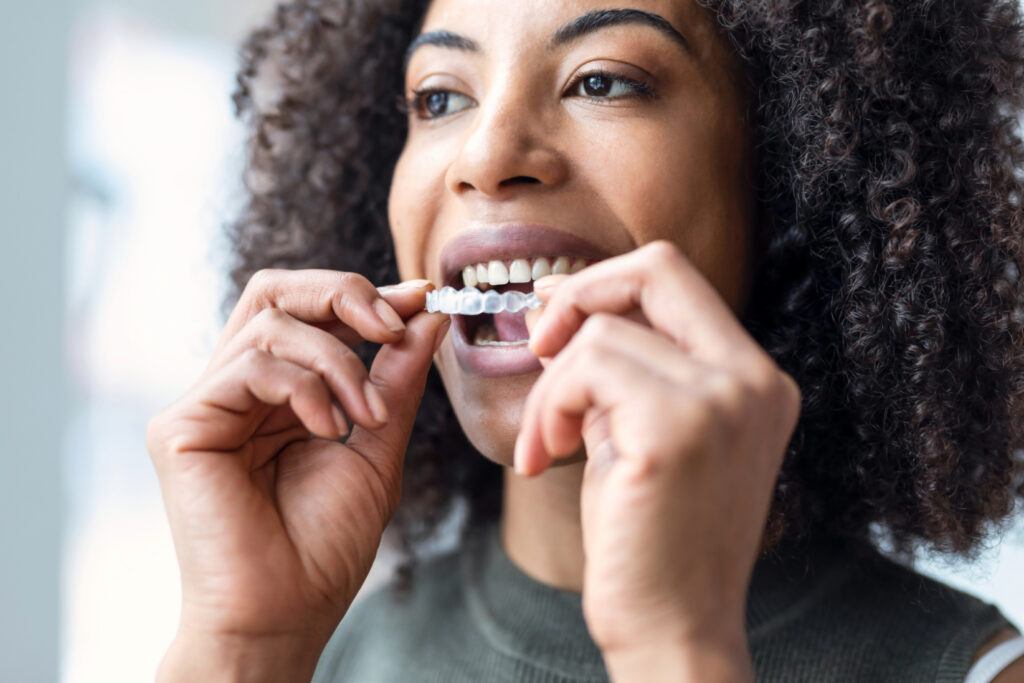
Woman wearing Invisalign after braces

Who’s a Good Candidate?

Not everyone who’s had braces before is automatically a candidate, so we evaluate a few things first.

You’re likely a good fit for Invisalign after braces if your teeth are mostly straight with mild crowding, spacing, or rotation. That describes most relapse cases, and they tend to respond really well. Cases with severe bite problems, heavy grinding, active gum disease, or very complex movements may need traditional braces instead.

Your oral health matters too. If you have untreated gum disease or significant decay, we address that before moving any teeth. Your first round of orthodontics also factors in. If you still have a permanent retainer bonded behind your teeth, we work around it or remove it, and if you had extractions before, that shapes the plan this time.

Compliance is the big one. Invisalign only works if you wear the aligners 20 to 22 hours a day. If you struggled with retainer wear before, we’ll have an honest conversation about whether clear aligners are the right choice, or whether braces might serve you better.

The Evaluation and Treatment Process

When you come in, we review your dental history, including records from your first round of braces if you have them. We take digital scans, X-rays, and photos to see exactly how your teeth and bite have changed.

Then we build a custom plan using Invisalign’s software, which shows you a digital preview of how your teeth can move and gives us a realistic timeline. For someone who’s had braces before and needs minor corrections, treatment often runs 3 to 9 months. More moderate changes might take 9 to 18 months, depending on complexity and how consistently you wear the aligners.

You’ll get a new set of aligners every 1 to 2 weeks, each nudging your teeth a little further. Some people feel mild tightness switching to a new set, which usually fades within a day or two. We may add attachments, small tooth-colored bumps that help the aligners grip, and in some cases a little IPR (light reshaping between teeth to create space). Both sound bigger than they are. You’ll come in every 6 to 8 weeks so we can check your progress.

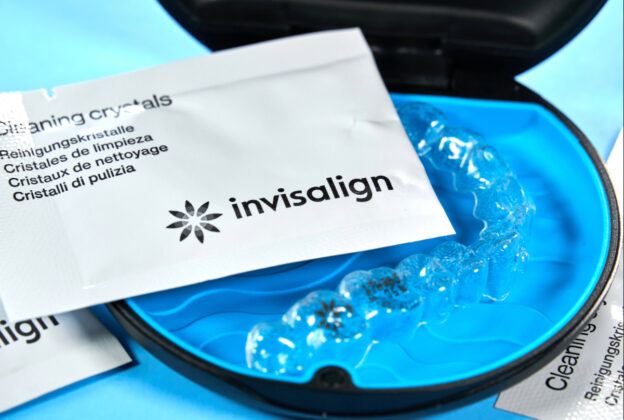
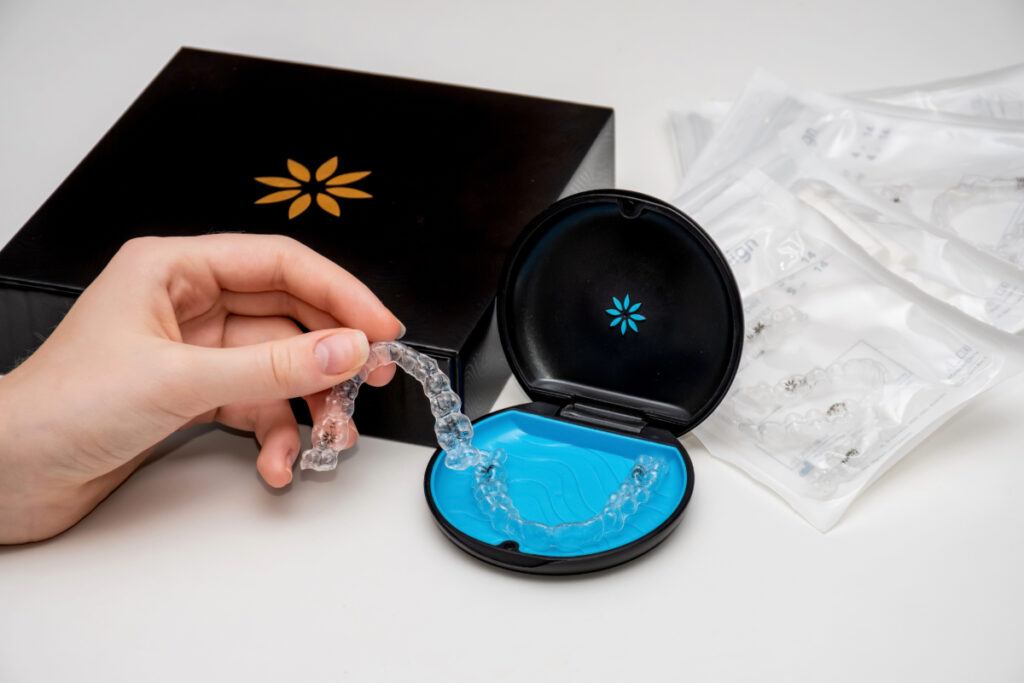
Invisalign clear aligner trays

Invisalign or Braces Again? And a Word on Mail-Order Aligners

Some people wonder whether they should just redo braces. Traditional braces handle more complex cases and don’t depend on you remembering to wear them. But if your case fits and you’re committed, Invisalign is the more discreet, comfortable route. Our page on why Invisalign might work for you digs into the differences.

We also get asked about mail-order aligner companies. Here’s our honest take: relapse cases need professional oversight. Your teeth have already been moved once, and moving them again without regular monitoring raises the risk of root damage, bite problems, or uneven results. This is one to do with an orthodontist watching, not through the mail.

Cost and Financing

Clear aligners for retreatment usually cost less than full comprehensive treatment, since you’re correcting relapse rather than starting from scratch. Here are typical ranges, which we confirm for your exact case at your consultation:

Case type Estimated time Typical cost range
Mild relapse 3-9 months $3,000-$4,500
Moderate relapse 9-18 months $4,500-$6,000

Costs vary by complexity and insurance, and some plans offer benefits even for a second round of orthodontics. If cost is a concern, we’ll walk through financing options with you. You can also take a look at our Invisalign FAQs for more.

Getting Retention Right This Time

Let’s be blunt about the thing that got a lot of people here: if you don’t wear a retainer after Invisalign, your teeth can shift again. So this time, we’ll make the plan easy to stick to.

Once your aligners are done, we fit you for retainers. Most people wear them full-time for a few months, then switch to nights only. Here’s the part worth hearing clearly: the American Association of Orthodontists considers retention an indefinite commitment, which in practice means wearing a retainer at night, a few nights a week, for the long haul. It’s a small habit that protects everything you just invested. Some cases also do well with a fixed retainer bonded quietly behind the front teeth.

Is This Right for You?

If your teeth have shifted since braces and it bothers you, Invisalign is often a practical way to fix it without the visibility of traditional braces. It works best for mild to moderate relapse, and it does ask for your commitment.

A lot of adults feel embarrassed coming back in. You really don’t need to be. Retreatment is common, and it’s fixable. The best way to know for sure is to come see us. Book a free consultation, and we’ll look at your specific situation, talk through realistic expectations, and help you decide whether Invisalign, braces, or another approach makes the most sense.

Frequently Asked Questions About Invisalign After Braces

Can teeth really shift back after braces?
Yes, and it’s common. Teeth naturally drift toward their old positions once braces come off, especially the lower front teeth, and the effect adds up over years. Without consistent retainer wear, most people see some meaningful shifting within 5 to 10 years. The good news is that mild to moderate relapse is usually straightforward to correct.
Do I need braces again, or can Invisalign fix relapse?
For most relapse cases, Invisalign is enough. Since your teeth were already aligned once and the shifting is usually mild to moderate, clear aligners can often bring them back without going back to full braces. More complex or severe cases may still need braces, which is what a consultation helps us determine.
Is Invisalign cheaper after braces?
Often, yes. Minor corrections usually cost less than comprehensive treatment because there’s less movement to do, though there’s no automatic discount. Pricing depends on complexity and treatment time. We’ll give you an exact quote at your consultation and go over insurance and financing.
How long does Invisalign take after braces?
For mild relapse, treatment often runs 3 to 9 months. Moderate cases usually take 9 to 18 months. Your exact timeline depends on how much your teeth have moved and how consistently you wear the aligners, since they only work while they’re in.
Will I have to wear a retainer forever?
Essentially, yes, and it’s worth it. The American Association of Orthodontists treats retention as an ongoing commitment rather than a phase that ends. In practice that usually means a retainer at night a few times a week. It’s a small habit, and it’s the single best way to keep your results this time around.
Is a retainer or Invisalign better for minor shifting?
It depends on how much has moved. If your teeth only drifted slightly, a new retainer may hold them where they are, but it won’t move them back. If they’ve actually shifted out of position, Invisalign moves them back and then a retainer keeps them there. We’ll tell you honestly which one your case needs.
Important: This article is for general educational purposes only and is not a substitute for professional orthodontic, dental, or medical advice. Always consult your orthodontist or a qualified provider for personalized guidance about your smile, treatment options, and oral health. If you have any concerns, please contact Petrover Orthodontics directly.