Monthly Archives: January 2026

Best Toothbrush for Braces: How to Pick the Right One

At a glance

  • Soft or extra-soft bristles and a small head are the essentials, manual or electric.
  • Electric brushes remove more plaque (a Cochrane review found about 21% more after three months).
  • Add one interdental tool plus one flossing method, or a water flosser.
  • Replace your brush or brush head every 2 to 3 months.

We know that starting orthodontic treatment brings a lot of questions about keeping your teeth clean. Many patients come in worried about food getting stuck, plaque buildup, or how to brush without damaging their brackets. It’s completely normal to feel that way, and we see it every day at Petrover Orthodontics. The good news is that with the best toothbrush for braces and a few simple habits, cleaning becomes straightforward and effective.

Let us walk you through what actually matters when you’re choosing a toothbrush for braces. We’ll cover our picks by category (in a quick comparison table), the extra tools that reach where a brush can’t, a simple daily routine, and answers to the questions we hear most.

Why Braces Need a Different Brushing Approach

Brackets and wires create small spaces where food and plaque love to hide. A regular brush simply can’t reach where it used to, and over time that can mean irritated gums, white marks on the teeth, or even minor cavities. Those are exactly the issues we want to help you avoid so you finish with the best possible result. We notice this often with patients who start out using their everyday at-home brush.

White marks (dentists call them white spot lesions, which are really early decay) are the big one to watch. They show up around brackets when plaque sits too long, and they can linger even after the braces come off. The reassuring part is that they’re preventable, and it mostly comes down to the tool in your hand and how you use it.

You don’t need a lot of fancy gear. You just need a brush that reaches around the hardware without being harsh on your gums or your treatment. Three things actually matter here:

  • Soft or extra-soft bristles clean well without irritating your gums.
  • A small, compact head gets into tight spots and reaches the back brackets.
  • A comfortable handle makes a real difference when you’re brushing twice a day, or more after meals.

Many braces brushes also have a V-notch cut into the bristles that helps the brush sit right over the bracket and wire.

So which brush does all of that best? Let’s compare.

Manual vs Electric Toothbrushes for Braces: Which One Works Best?

Manual toothbrushes are still a solid choice for many people. They’re affordable, they give you full control over pressure, and they travel anywhere. Plenty of our patients do beautifully with a soft, compact, V-notch ortho brush and good technique, which we’re always glad to show you right in the chair.

That said, many patients, especially busy teens and parents, prefer an electric toothbrush once they try one. The research generally favors them for braces. A large Cochrane review found powered brushes remove more plaque than manual ones, around 11% more in the first few months and about 21% more after three months of use. Other clinical research on people wearing fixed braces has found powered brushing lowers plaque and reduces gum bleeding too. Since better plaque control is what protects you from white spots, that edge matters during treatment.

You’ll also hear the Oral-B versus Sonicare question a lot, and there’s a real trade-off worth understanding. Oral-B’s round, oscillating head wraps around each bracket for 360-degree contact, and studies show a small but significant edge for plaque and gum health, plus the replacement heads tend to cost less. Sonicare uses a gentler back-and-forth sonic action that many people with sensitive gums prefer, though braces can dampen those sonic waves in a few spots. There’s no single winner here, and either one works well for braces.

Whichever way you lean, look for a pressure sensor, a two-minute timer, and an orthodontic brush head shaped to fit around your hardware.

We know it’s easier to see this in action than read about it. This short video walks through the technique step by step.

Best Electric Toothbrush for Braces Review – Oral-B iO

So here are the specific brushes orthodontists tend to point people toward, by category.
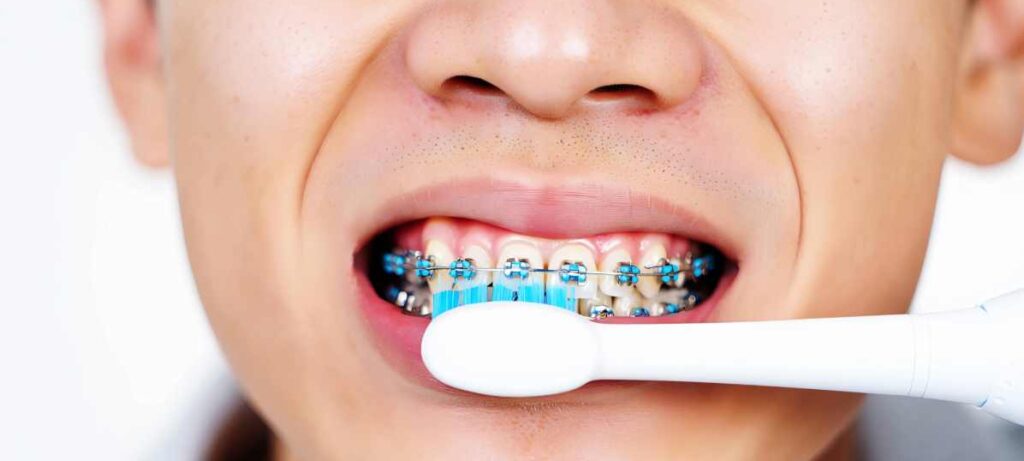
Brushing technique around braces brackets and wires

Best Toothbrushes for Braces by Category (Comparison Table)

Short on time? Here’s the shortlist. These are the kinds of brushes orthodontists generally recommend for braces, sorted by category so you can match one to your budget and your preference. We’re not selling any of these or endorsing a single brand, just pointing you toward the features that work well around brackets and wires.

Category Pick Why it works for braces Keep in mind
Best overall electric Oral-B iO (Series 5/9) Round oscillating head wraps around each bracket; quieter magnetic motor; pressure sensor; small but significant plaque/gum edge in studies Premium price, pricier replacement heads
Best budget electric Oral-B Pro 1000 8,800 strokes/min, 2-minute timer with 30-second alerts, pressure sensor, ADA Seal, usually under $50, takes the Ortho head Fewer modes, no app
Best sonic Philips Sonicare ProtectiveClean (4100/5100/6100) Gum Care mode for gentle massage; pressure sensor; gentle feel favored for sensitive gums Back-and-forth motion contours brackets a bit less directly
Best manual (specialty) Curaprox CS 5460 Ortho 5,460 ultra-soft filaments in a bracket-groove V-trim; compact head reaches back brackets No timer or sensor; replace every 2-3 months
Budget manual GUM Orthodontic Toothbrush (#124) V-trim soft bristles shaped around brackets, wires, and ligatures; narrow neck; costs just a few dollars Fully manual, no feedback
Under-the-wire tool TePe or GUM Proxabrush interdental brushes Reach under the archwire and between brackets where no toothbrush can; sized to the gap Must match the size; an extra step (more below)
Water flosser Waterpik + Orthodontic Tip (OD-100E) Tapered tip flushes plaque around brackets and under the gumline; strong option for hard-to-reach spots Supplements brushing, doesn’t replace it; replace the tip about every 3 months

Pick your brush type first, manual or electric, budget or premium, then let feel and price decide the rest. Honestly, any brush on this list beats the old, flared-out one you’ve had for six months. If you’re not sure, bring your current brush to your next visit and we’ll help you choose.

The right pick also shifts a bit by age. Here’s how.

Best Toothbrush for Kids, Teens, and Adults with Braces

The brush that gets your teenager to actually brush is not the same one that suits a 9-year-old, and neither is quite what a busy adult needs. Soft bristles and a small head stay constant across all three, but the motivation angle changes with age. Here’s what tends to work at each stage.

Kids (roughly 7 to 11). For younger kids, we love a brush that makes cleaning feel less like a chore. The Philips Sonicare for Kids uses gentle sonic vibrations, soft bristles, and app connectivity that turns brushing into a game and helps build the habit. The Oral-B Kids brush pulses every 30 seconds to signal a quadrant change, so kids learn to cover the whole mouth. One handy bonus for parents: Oral-B Kids handles take the full range of adult replacement heads, including the Ortho head, so one brush can grow with your child as they move into braces. If you’re managing more than one kid in treatment, that simplifies the whole bathroom drawer.

Teens. Teens stick with a brush that looks good, charges overnight, and isn’t loud in a shared bathroom. A sleek rechargeable Sonicare or Oral-B fits the bill, as do quieter budget options like the usmile P10 S. Motivation is the real win at this age, and it tends to stick: in one study of 11 to 17-year-olds in braces, 92% liked using a water flosser enough to keep it up every day.

Adults. Adults usually want something efficient that fits a busy schedule, so quiet operation, long battery life, and a travel case go a long way. The Philips Sonicare DiamondClean 9400 is a gentle premium sonic option with a travel case, and the Oral-B iO is hard to beat for efficiency. Whatever the age, soft bristles and a small head are the constants.

Extra Tools That Make Cleaning Around Braces Much Easier

Here’s the part a lot of people miss: no toothbrush, however good, actually reaches under the archwire. A couple of small helpers cover the spots a brush physically can’t.

Interdental brushes. These tiny bottle-brush tools slide under wires and between brackets. TePe and GUM Proxabrush both make versions built for braces, in a range of widths to match different gaps. Getting the size right matters: the brush should fit snugly without forcing, so size down if it hurts. Different gaps can need different sizes, so keep a couple on hand and we’ll confirm what fits at your next visit.

Flossing under the wire. Threading floss under the archwire is fiddly at first, so make it easy on yourself. Oral-B Super Floss combines a stiffened threader end, a spongy middle section, and regular floss in one pre-cut strand, which is a great on-ramp for braces, bridges, and wide gaps. Use a fresh strand for each tooth. Plain floss threaders work too if you’d rather use your own floss.

Water flosser. This one earns its own mention. A Waterpik paired with the Orthodontic Tip (OD-100E) sends a tapered stream of water around brackets and wires. In one clinical study of teens with braces, adding a water flosser removed noticeably more plaque than brushing and string flossing alone. It supplements brushing rather than replacing it, and you’ll want to swap the tip about every 3 months.

For traditional metal braces, these tools are essential. For clear aligners they’re still helpful, just less intensive. A brush, plus one interdental tool, plus one flossing method covers every surface in your mouth.
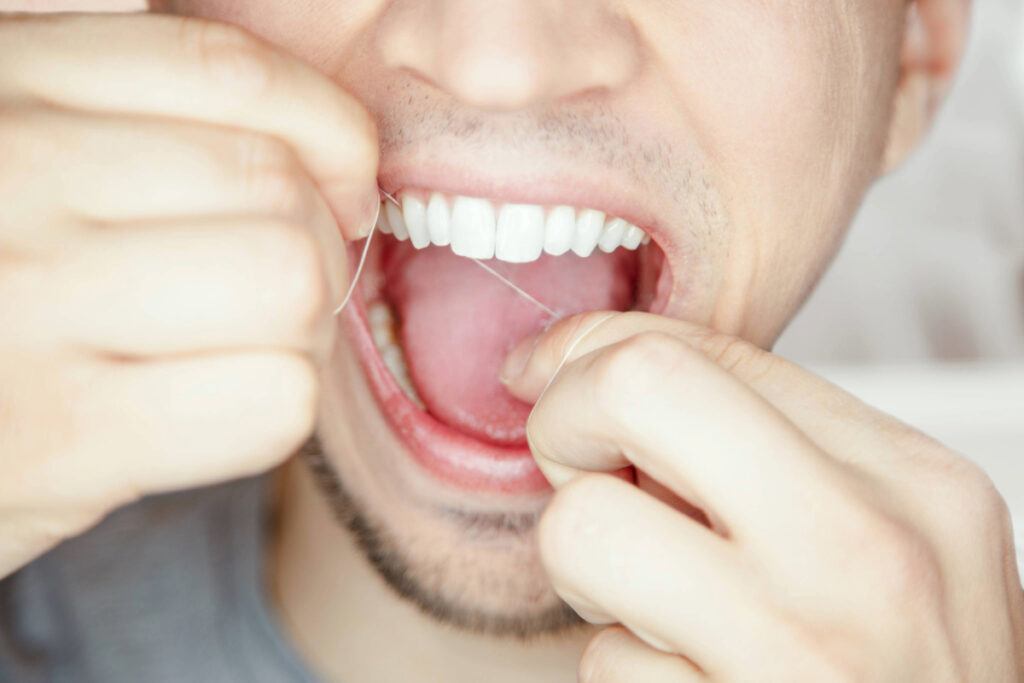
Dental floss and interdental tools for cleaning around braces

Toothbrushes and Toothpastes to Avoid with Braces

A few common buys can quietly work against you, so consider this a friendly heads-up rather than a scolding. Skip these and you’ve removed most of the risk.

  • Medium or hard bristles. They’ve been shown to damage gums and enamel, and with braces your brackets and wires already add friction points. Go soft or extra-soft only. (That’s also the answer if you’ve wondered what bristle strength to use.)
  • Worn or flared-out brush heads. Once the bristles splay out, they clean poorly and are more likely to catch on a wire. Replace your brush or head about every 2-3 months, sooner if the bristles start to fray.
  • Oversized brush heads. A big head can’t get into the tight spots around brackets. A compact head wins every time during treatment.
  • Charcoal toothpaste. The particles lodge around brackets and are tough to remove, charcoal can stain the bonding adhesive holding your brackets on, and its abrasiveness wears enamel over time. It’s best to wait until your braces come off.
  • Abrasive whitening pastes in general. Same abrasion concern, and braces block even coverage anyway, so whitening now can leave uneven color once the brackets come off. If you want a gentle, whitening-friendly option, a hydroxyapatite toothpaste is non-abrasive and pH-neutral, and studies suggest it can help reduce the demineralization that leads to white spots.
  • Brushing too aggressively. Pressing hard irritates your gums and doesn’t clean any better. Let a soft brush, or an electric brush’s motion, do the work for you.

A Simple Daily Routine That Actually Works

Here’s the whole routine, start to finish, in about three minutes.

Brush at least twice a day for two full minutes, after breakfast and before bed, plus after lunch if you can. A quick heads-up: brushing with braces often takes a little longer than two minutes, and that’s normal, not a sign you’re doing it wrong.

For technique, rinse with water first to loosen any food trapped around your brackets and wires. Hold the brush at about 45 degrees to the gumline and use small circles. Then angle it down onto the top of each bracket, and back up under the bracket and along the wire. Cover the outer, inner, and chewing surfaces of every tooth, spending roughly 25 to 30 seconds on each bracket area.

Then clean between the teeth with a floss threader or Super Floss, an interdental brush, or a pass with your water flosser. Finish with a fluoride mouthwash if your dentist recommends it.

The slip-ups we see most often are brushing too hard, missing the spots behind the back teeth, and waiting too long to replace a worn brush. Steer around those three and you’re in great shape. Consistency matters more than perfection.

The Bottom Line

The best toothbrush for braces is a soft-bristled, small-head brush that you’ll actually use correctly twice a day. Go electric if you like the extra plaque-removing power, and pair whatever you choose with one interdental tool and one flossing method so you cover the spots a brush can’t reach. Any of the picks above beats a worn-out brush, so don’t overthink the brand.

If you’re already a patient, ask us to show you the technique at your next adjustment. We’re glad to walk you through it on your own teeth, which beats any diagram. If you’re not a patient yet, take a look at our braces and Invisalign options, then book a free consultation and we’ll get you set up with everything you need before treatment even starts. No pressure, no surprises. We’ve got your smile covered.

Frequently Asked Questions About Toothbrushes for Braces

Is Oral-B or Sonicare better for braces?
Oral-B’s round oscillating head generally edges it out for braces, because it wraps around each bracket for 360-degree contact and studies show a small but significant advantage for plaque and gum health, with cheaper replacement heads too. That said, Sonicare’s gentler sonic action is still effective and is often preferred by people with sensitive gums. Either one works well if you use it consistently and correctly.
What bristle strength should I use with braces?
Soft or extra-soft only. Medium and hard bristles can scratch enamel and irritate your gums, and that’s a bigger risk with braces because your brackets and wires already create extra friction points. A soft brush cleans just as well without the damage. If your brush doesn’t say soft on the package, it’s the wrong one for treatment. Look for orthodontic or extra-soft on the label.
Are electric toothbrushes safe to use with braces?
Yes. Dental sources citing the ADA confirm electric toothbrushes are safe with braces and may remove more plaque than a manual brush, as long as you use a soft-bristled head and don’t press too hard. A pressure sensor helps you avoid over-brushing. An orthodontic brush head shaped to fit around your brackets makes an electric brush even more effective during treatment.
How often should I replace my toothbrush or brush head with braces?
About every 2 to 3 months, or sooner if the bristles start to fray or flare out. Worn bristles clean less effectively and are more likely to catch on your wires. Braces can wear a brush down a little faster than usual, so keep an eye on the bristle shape rather than watching only the calendar, and swap it the moment it looks splayed.
What’s the best toothbrush for kids with braces?

Philips Sonicare for Kids and Oral-B Kids are the two most commonly recommended electric picks. The Sonicare uses gentle sonic action with soft bristles and an app that helps kids build the habit. The Oral-B Kids takes the adult Ortho head and pulses every 30 seconds to prompt a quadrant change. Both make brushing feel less like a chore, which is half the battle at that age.
Important: This article is for general educational purposes only and is not a substitute for professional orthodontic, dental, or medical advice. Always consult your orthodontist or a qualified provider for personalized guidance about your smile, treatment options, and oral health. If you have any concerns, please contact Petrover Orthodontics directly.

image of pregnant lady with braces

Can You Get Braces While Pregnant? What Expecting Moms Should Know

At a glance

  • For most healthy pregnancies, braces are considered safe (per the ADA, AAO, and ACOG).
  • Pregnancy can bring gum changes, morning-sickness enamel wear, and dry mouth.
  • Tell your orthodontist, and keep any medication decisions with your OB-GYN.
  • The second trimester is a common, comfortable time to start.

This comes up all the time from our expecting patients in Boynton Beach and Wellington. So let’s start with the reassurance you came here for.

The short answer: yes, in most cases you can safely start or continue braces while pregnant. Orthodontic treatment is generally low-risk because it doesn’t involve surgery or medications that affect your whole body. It works by gently guiding your teeth, nothing more. That said, every pregnancy is unique, so timing, your comfort level, and good communication with both your orthodontist and OB-GYN really matter.

Below, we’ll walk you through the questions moms actually ask us. How pregnancy changes your gums, what’s safe to reach for when your teeth feel sore, whether dental X-rays are okay, and the best time to begin. Take a breath. You’re in good hands, and most of this is easier than you’d expect.

Is It Safe to Get Braces While Pregnant?

For the majority of healthy pregnancies, yes. Braces are considered safe and don’t pose a direct risk to your baby. Leading professional groups, including the American Dental Association (ADA) and the American Association of Orthodontists (AAO), confirm that routine orthodontic care can be safely provided during pregnancy with the right precautions.

Here’s why braces sit comfortably on the safe side. They work by applying gentle, steady pressure to shift teeth over time. There’s no surgery involved, and no systemic medication that travels through your body to your baby. That’s a big part of what keeps the safety profile so reassuring.

The bigger medical authorities agree. ACOG (the American College of Obstetricians and Gynecologists) states in Committee Opinion No. 569 that preventing, diagnosing, and treating oral conditions is safe during pregnancy and shouldn’t be delayed. Yet many women still skip dental care while expecting, usually out of worry rather than any real risk.

The one thing we ask? Tell us right away if you’re pregnant or think you might be. That lets our team plan your timing, keep a closer eye on your gum health, and handle any imaging thoughtfully so you stay comfortable the whole way through.

Pregnant woman wearing braces

How Pregnancy Affects Your Teeth and Gums

Pregnancy hormones temporarily change what’s happening in your mouth, and it can catch you off guard. The good news is that most of these changes settle down after your baby arrives. Knowing what’s normal helps you protect your teeth in the meantime, especially with braces in the picture.

Pregnancy Gingivitis (and the Harmless “Pregnancy Tumor”)

If your gums feel puffy, tender, or bleed a little when you brush, you’re far from alone. The CDC notes that about 60% to 75% of pregnant women get gingivitis, because shifting hormones exaggerate the gums’ response to plaque. Braces make plaque a bit harder to clean around, so the two can compound each other.

This is worth staying ahead of. The CDC notes that untreated gingivitis can progress toward bone loss, and gum disease has been linked to preterm birth and low birth weight in some studies. That connection isn’t fully understood, so it’s not cause for panic, just a good reason to keep up your brushing, flossing, and regular cleanings.

You might also notice a small, red bump on your gums, sometimes called a “pregnancy tumor.” The clinical name is a pyogenic granuloma, and despite the scary word, it’s benign. According to NIH StatPearls, these usually show up in the second or third trimester and typically clear up on their own after delivery, so they’re rarely removed while you’re pregnant.

Morning Sickness and Enamel Erosion

Morning sickness is rough enough without it threatening your teeth, but here’s something important to know. When you vomit, stomach acid washes over your teeth and temporarily softens the enamel. Your instinct is probably to brush right away. Please don’t. Brushing acid-softened enamel can actually scrub it away.

Instead, rinse first. Swish with plain water, or use the rinse ACOG recommends: 1 teaspoon of baking soda dissolved in 1 cup of water, which helps neutralize the acid. Then give it a little time. Many dentists suggest waiting about 30 minutes before brushing, so your enamel can firm back up. After that, brush gently with a fluoride toothpaste. It’s a small habit that protects your smile through the queasy weeks.

Dry Mouth and a Higher Risk of Decay

You may notice your mouth feels drier than usual during pregnancy. Hormones like progesterone can reduce saliva flow, and since saliva helps neutralize acid and rinse away food and bacteria, less of it can mean a higher cavity risk. This one is widely repeated by dentists rather than tied to a single hard statistic, so think of it as a sensible precaution. Sip water often, stick with your fluoride toothpaste, and keep sugar-free gum handy to help keep saliva flowing.

Soreness, Nausea, and Fitting Braces Into Your Schedule

Beyond the gum changes, two everyday worries come up: will adjustments hurt more, and how do braces fit around an already-full calendar?

On comfort, adjustments can cause temporary soreness, and that soreness may feel more noticeable at certain stages of pregnancy. If you’re dealing with morning sickness too, some days are simply better than others. So schedule your visits for when you’re feeling your best, and tell us if something feels off. A quick conversation usually smooths out the next step.

On scheduling, we know pregnancy adds appointments of its own, especially as you get further along and your prenatal visits pick up. That’s completely normal, and orthodontic schedules can almost always flex around it. We’ll talk through the rhythm of your visits up front so nothing feels like a scramble, and we’ll adjust as your needs change.

Easing Braces Soreness Safely During Pregnancy

When your teeth feel sore after an adjustment, your first moves can be entirely drug-free, and honestly, they work well. Try these:

  • Cover any bracket or wire that’s rubbing with orthodontic wax.
  • Stick to soft foods for a day or two after an adjustment to ease chewing pressure.
  • Rinse with warm salt water to soothe tender gum tissue.
  • Sip cold water, or hold a cold compress against your cheek to calm general soreness.
  • Keep up gentle brushing and flossing, so soreness isn’t compounded by pregnancy gingivitis.

For medication, the rule is simple: any medication decision, including over-the-counter pain relievers, is one to make with your OB-GYN first. Here’s the general landscape they’ll be weighing. ACOG describes acetaminophen (Tylenol) as the pain reliever generally considered the option of choice during pregnancy. NSAIDs are a different story. The FDA warns, in its October 2020 drug safety communication, against using NSAIDs like ibuprofen (Advil), naproxen (Aleve), and aspirin at around 20 weeks of pregnancy or later, because of a rare but serious risk of kidney problems in the baby and low amniotic fluid.

We’re not telling you to take anything. That call belongs to your OB-GYN, who knows your full picture and has the final word.

The Best Time to Start Braces During Pregnancy

Many patients like to begin in the second trimester, and there’s good reasoning behind it. That’s usually when first-trimester nausea and fatigue start to ease, so you simply feel more up for it. A peer-reviewed review of orthodontic care during pregnancy also recognizes the second trimester as the safest window for oral treatment, because your baby’s early development is largely complete by then. Late in the third trimester, we tend to keep chair-side visits shorter to avoid long stretches lying flat on your back.

Here’s the honest nuance, though. The ADA states that dental treatment is safe at any stage of pregnancy and doesn’t name a mandatory “safest trimester.” So think of the second-trimester preference as a comfort and practicality choice, not a safety rule you have to follow. You might start earlier or later based on how you feel and what your schedule allows, and we’ll help you find the timing that fits.

Pregnant woman considering orthodontic treatment timing

Are Dental X-Rays Safe During Pregnancy?

Few things worry expecting moms more than an X-ray, so let’s put real numbers to it. The IAEA (International Atomic Energy Agency) estimates the fetal dose from a dental X-ray at roughly 0.009 to 7.97 microsieverts, usually less than the natural background radiation you’d absorb in a single day. The associated risk, they note, is far too low to ever affect a pregnancy. A needed dental film is genuinely not something to fear.

There’s one honest wrinkle worth knowing, and it’s about shielding. ACOG still recommends shielding your abdomen and thyroid, while the ADA’s newer guidance says shielding is no longer necessary, because modern equipment delivers so little radiation. Both agree the dose is very low. Our approach: we still offer a lead apron for peace of mind, and we postpone non-essential imaging until after delivery whenever we reasonably can. Either way, always tell us you’re pregnant so we can make the right call together.

Braces vs Clear Aligners During Pregnancy

Some patients wonder if clear aligners like Invisalign are the “safer” pregnancy pick. It’s a fair question, and the real answer is about convenience, not safety grades.

Aligners come out for eating, brushing, and flossing, which can make it easier to keep your teeth clean during stretches when your gums feel sensitive. That’s a genuine perk when pregnancy gingivitis is more likely. But no medical authority, ACOG, ADA, or AAO, has declared aligners medically safer or better than braces during pregnancy. For some smiles, traditional braces are still the better tool for the job. Treat the aligner advantage as a comfort and hygiene consideration to talk through with your orthodontist, and we’ll help you choose what fits your goals and your mouth best.

When Might It Be Better to Wait Until After Pregnancy?

Braces are usually safe during pregnancy, but we’d be doing you a disservice if we pretended waiting is never the right move. Some patients reasonably choose to hold off if they’re dealing with significant nausea, severe gum inflammation, or a high-risk pregnancy that means limiting non-essential appointments.

Gum health is the one to watch most closely. The same peer-reviewed review notes it’s more sensible to postpone or pause active tooth movement while your gums are actively inflamed, and to treat that inflammation first. There’s no rush that outweighs your comfort here. Whether to start now or wait is a personal decision based on your comfort, your timing, and your overall health, and it’s one you make together with your orthodontist and OB-GYN.

Simple Tips for Wearing Braces While Pregnant

Here’s your quick, save-it-for-later checklist:

  • Step up your brushing and flossing and keep regular cleanings to stay ahead of pregnancy gingivitis. If you want help picking tools that clean around brackets fast, see our guide to the best toothbrush with braces.
  • Keep orthodontic wax and a small hygiene kit in your bag for touch-ups on the go.
  • On nausea days, lean on soft foods and don’t skip cleaning your teeth, even when you don’t feel like it.
  • After morning sickness, rinse with water or the baking-soda rinse and wait a bit before brushing.
  • Use a warm salt-water rinse to soothe any sore spots after an adjustment.
  • If you’re starting elective treatment, aim for the second trimester if it fits your comfort.
  • Keep both your OB-GYN and your orthodontist in the loop, especially about any medication.

Common Myths About Braces and Pregnancy, Cleared Up

Myth: Braces can harm your baby. Reality: Orthodontic care involves no surgery and no systemic medication, and it’s considered safe by the ADA, AAO, and ACOG.

Myth: You have to remove your braces or pause treatment once you’re pregnant. Reality: Pregnancy alone isn’t a reason to stop. Treatment usually continues, just with closer attention to your gum health.

Myth: Pregnancy hormones make your teeth move way faster. Reality: That popular claim outruns the evidence. A peer-reviewed review found the human data is limited.

Myth: A dental X-ray will definitely hurt your baby. Reality: The fetal dose is extremely low, often less than a single day of natural background radiation, per the IAEA.

Braces and Pregnancy FAQs

Can I get braces while pregnant?
Yes, in most cases it’s safe to start or continue orthodontic treatment during pregnancy. Braces don’t involve medication or surgery, and treatment plans can be adjusted to support your comfort and safety. Be sure to tell your orthodontist you’re pregnant so your care can be coordinated appropriately.
Is it safe to put braces on while pregnant?
For most healthy pregnancies, yes. Orthodontic treatment doesn’t pose a direct risk to your baby, and the ADA and AAO confirm routine care can be provided safely. Your orthodontist may take extra precautions, like postponing non-essential X-rays and monitoring your gum health more closely.
Do I have to tell my orthodontist I’m pregnant?
Yes. Letting your orthodontist know allows your care team to plan treatment safely and comfortably. It helps ensure that imaging, any medication questions, and appointment positioning are all handled appropriately for you and your baby.
What dental work should be avoided while pregnant?
Elective procedures are often postponed during pregnancy, especially in the first trimester. Orthodontic care like braces is usually fine, but certain medications and non-essential imaging may be delayed as a precaution. Your orthodontist can coordinate with your OB-GYN whenever needed.
What can I take for braces pain while pregnant?
Always confirm with your OB-GYN first. Start with drug-free relief: orthodontic wax, soft foods, warm salt-water rinses, and cold water. ACOG generally describes acetaminophen (Tylenol) as the pain reliever of choice in pregnancy, while the FDA advises against NSAIDs like ibuprofen and naproxen at about 20 weeks or later.
Can pregnancy affect how fast my teeth move?
Probably not in a way you’ll notice. A 2024 peer-reviewed review found the human evidence is limited, and a placebo-controlled trial of relaxin showed no significant difference in tooth movement. Most of the “hormones speed things up” idea comes from animal studies that don’t translate directly to people, so don’t expect pregnancy to change your timeline.
Is Invisalign safe during pregnancy?
Yes. Like braces, Invisalign involves no surgery and no systemic medication. No official body calls aligners medically safer than braces during pregnancy, so the appeal is practical: they’re removable, which can make brushing and flossing easier while your gums are sensitive. Talk it through with your orthodontist to decide what suits you.
Can I get my braces tightened while pregnant?
Yes. Routine adjustments involve no radiation and no systemic medication, and there’s no solid human evidence that pregnancy destabilizes tooth movement. Your orthodontist may keep a closer eye on gum inflammation, since it’s best not to push active tooth movement while your gums are inflamed.

Still weighing whether now is the right time? We have these conversations every week with expecting moms in Boynton Beach and Wellington, and we’re happy to answer yours. Book your free consultation, and we’ll walk you through your options, coordinate with your OB-GYN if you’d like, and build a plan that fits this season of your life. You can also explore our full range of orthodontic treatment options to see what might be the best fit.

Important: This article is for general educational purposes only and is not a substitute for professional orthodontic, dental, or medical advice. Always consult your orthodontist or a qualified provider for personalized guidance about your smile, treatment options, and oral health. If you have any concerns, please contact Petrover Orthodontics directly.