Monthly Archives: October 2026

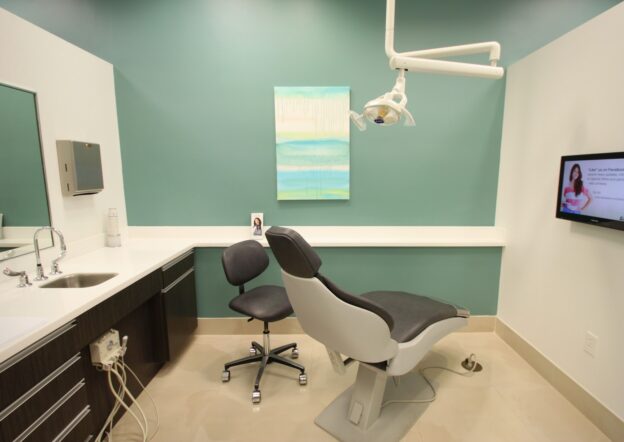
Orthodontic treatment chair in a bright treatment room

Does Insurance Cover Braces? What to Check Before Treatment Starts

Does Insurance Cover Braces? What to Check Before Treatment Starts

At a glance

  • Sometimes. The AAO says coverage can vary significantly between policies, and Aetna says not all dental plans include orthodontic coverage.
  • Check your plan’s orthodontic benefit, lifetime maximum, age limit, waiting period, and how it pays out.
  • Florida Medicaid’s policy covers orthodontic services for recipients under 21 with a handicapping malocclusion.
  • Our team will verify your orthodontic benefits before you begin and file all claims on your behalf.

The worst time to learn that your plan won’t pay for braces is after they’re on. Some plans won’t pay for treatment that began before your coverage began, some stop paying partway through if your child passes the plan’s age limit, and changing plans during treatment can affect what gets paid. A few phone calls before the first appointment can help you avoid that surprise.

So, does insurance cover braces? Sometimes. Dental insurance can include a benefit for orthodontic treatment, but the American Association of Orthodontists (AAO) says coverage “can vary significantly between policies”. Aetna states plainly that not all dental plans include orthodontic coverage. Whether your plan helps depends on its own terms, such as whether it has an orthodontic benefit, how that benefit is calculated, any lifetime maximum or age limit, any waiting period, and how it pays out.

Below, we explain each of those terms in plain English, cover the Florida options if your plan doesn’t help, and finish with a list of questions you can take straight to your insurer. If you’d rather not make that call yourself, our team will check your orthodontic benefits for you before you begin.

“I have dental” isn’t the same as “braces are covered”

Knowing you have dental insurance doesn’t tell you whether braces are included. Cigna’s own guide to orthodontic insurance puts it simply: there are usually limits, and not every plan includes coverage for braces and other orthodontic services.

When a plan does include braces, the orthodontic benefit is what the plan will put toward orthodontic treatment. According to the AAO, insurance will typically either cover a percentage of the treatment cost or provide a fixed benefit amount. In other words, a plan may pay a share of your orthodontist’s fee (a percentage benefit) or a set dollar amount toward treatment (a fixed benefit).

Either way, look for a ceiling. Cigna notes that many plans apply a lifetime maximum to orthodontic treatment, meaning a cap on the total the plan will ever pay toward orthodontics for one person. That’s worth taking seriously: a plan that pays a healthy-sounding percentage can still stop at its lifetime maximum, so ask for both numbers.

There’s a second cap to ask about. A plan may also have a regular annual maximum, a yearly limit on what it pays. Delta Dental’s orthodontic FAQ says whether treatment is subject to both the orthodontic lifetime maximum and the regular annual maximum “depends on your group contract.” Its advice is to check your plan booklet.

The limits that can affect your coverage

Having an orthodontic benefit is the first hurdle. These four kinds of plan rules can affect whether it applies to your family, and when.

Age limits (there are two kinds)

Plans with orthodontic benefits can set an age limit, and insurers don’t agree on a typical cutoff: Humana’s guide mentions plans that restrict coverage to patients under 19, while MetLife’s mentions children under 18. The number that matters is the one in your plan.

The type of limit matters just as much. Aetna’s orthodontic care FAQs describe two:

  • Orthodontic age limit: braces must be placed before the patient reaches the age your plan specifies.
  • Dependent age limit: orthodontic benefits are available until your dependent reaches the age your plan specifies. After that, no benefits are paid, even if treatment isn’t finished.

The difference is easy to miss, and it changes the math. Under a dependent age limit, a teen who starts close to the cutoff could see the plan stop paying partway through. If your child is near either kind of limit, raise it when you book so timing is part of the conversation. You can read more about treatment for younger patients on our braces for kids and teens page.

Waiting periods and effective dates

Cigna notes that some plans have waiting periods before they pay for dental treatment such as braces. Starting too early can also cost you: Humana warns that braces may not be covered if you begin treatment before getting insurance, and Guardian says some orthodontic plans won’t cover braces placed before the policy’s effective date (the date your coverage starts).

So if you’re adding or changing a plan to help pay for braces, make sure the coverage is in force and any waiting period has passed before the braces go on. Guardian also suggests keeping the same plan through your child’s whole treatment where you can.

Children and adults

A plan can treat family members differently. Cigna’s example is a plan that covers braces for children but not for adults. HealthCare.gov notes that in the Marketplace, dental coverage isn’t an essential health benefit for adults, and health plans don’t have to offer adult dental coverage. Blue Cross NC says some coverage may be available for adults if braces are considered medically necessary. It also notes that dental insurance is separate from health insurance, which typically doesn’t cover dental treatments or braces.

If you’re an adult considering treatment, check your own coverage line by line rather than assuming it matches your child’s.

Braces or clear aligners

Don’t assume an orthodontic benefit covers every kind of appliance. One insurer, Delta Dental, says in its orthodontic FAQ for most of its PPO and Premier plans that if your plan covers orthodontia, Invisalign and other clear aligners provided by a licensed dentist or orthodontist are covered at the same rate as traditional braces. Other insurers’ guides just tell you to check. MetLife points out that your plan may specify which types of braces your orthodontic benefit covers, and UnitedHealthcare suggests checking whether a plan covers traditional braces, clear aligners, or both. If aligners are on the table, ask about them by name.

How the benefit actually gets paid

An orthodontic benefit doesn’t necessarily arrive as one payment on the day treatment starts, and the schedule can shape your budget.

Here’s one example. Delta Dental’s orthodontic benefits FAQ, which covers most of its PPO and Premier plans, says that for treatment over $500, payments are made in two installments: when banding occurs and again 12 months later. Treatment under $500 is paid in one lump sum at banding. Delta’s FAQ adds that your own benefits may differ from its general information, which is why “how and when do you pay?” belongs on your list of questions.

The same Delta Dental FAQ describes a pre-treatment estimate: your orthodontist submits the proposed treatment to the insurer, and the insurer sends back an overview of the total cost, how much the plan pays, and your share. Just treat it as an estimate. Delta’s FAQ notes that a pre-treatment estimate is not a guarantee of its final payment.

Ask your orthodontist’s office how your benefit will be applied to what you pay each month. Our cost of treatment page shows published example monthly payments with and without orthodontic benefits. They’re a rough ballpark, and your exact fee comes after your free consultation and treatment plan.

For what braces cost in Florida, see our Florida braces cost guide.

Changing jobs, changing plans, or two plans at once

Life doesn’t pause while someone’s in braces. People change jobs, lose coverage, or pick up a second plan through a spouse, and each of those can change what gets paid.

Switching plans mid-treatment. Aetna explains that some plans have a work-in-progress exclusion, meaning the new plan won’t cover treatment that started while you were covered by another plan. Delta Dental’s FAQ says your benefit payment will be affected if your eligibility changes or you change plans during treatment. Guardian’s guide to adult braces is more hopeful about one scenario: when your employer changes insurance companies mid-treatment, it says the new insurer “typically picks up the payments where the other company has left off.”

In practice, what happens depends on the new plan’s rules. Ask the new plan directly whether it has a work-in-progress exclusion, and tell your orthodontist’s office as early as you can.

Covered by two plans. Delta Dental’s general guide to dual coverage explains that having two dental plans doesn’t double your benefits. One plan is designated primary and the other secondary, and the combined amount the two plans pay doesn’t exceed the total fee your dentist has agreed to accept. Depending on the plans and state law, the secondary plan may pay some of what the primary plan leaves unpaid, or nothing more. Ask both plans whether they include an orthodontic benefit and which one pays first.

If your plan won’t cover braces: options in Florida

Florida Medicaid for children and young adults under 21

According to Florida’s Agency for Health Care Administration (AHCA), Florida Medicaid’s dental services for recipients under 21 include orthodontic treatment. Florida Medicaid’s dental coverage policy is more specific: it covers orthodontic services for recipients under 21 with a handicapping malocclusion, which it defines as “a condition that results in a disability or impairment to the recipient’s physical development.”

Approval can involve paperwork. Under Medicaid’s fee-for-service system, the policy requires providers to get authorization for orthodontic services when the fee schedule calls for it. The request includes an orthodontic assessment, clinical photographs, study models of the teeth, and two kinds of X-rays (a side view of the head and a panoramic view). The same policy says services for under-21s that go beyond its standard coverage may be approved if medically necessary. If your child’s Medicaid dental benefits come through a dental plan, that plan may have its own process, so ask the plan how it handles orthodontic approval.

For recipients 21 and older, the AHCA page lists emergency dental procedures for pain or infection, dentures, and denture-related services. Orthodontic treatment isn’t on that list.

Whether a particular orthodontist can treat your child under Medicaid is a separate question. Ask when you call any office, including ours.

Marketplace child dental coverage

If you buy health coverage through the Marketplace, HealthCare.gov’s guide to Marketplace dental coverage explains that dental coverage is an essential health benefit for children 18 and younger. That means it must be available to you, either as part of a health plan or as a separate dental plan. You don’t have to buy it, and you can’t buy a Marketplace dental plan unless you’re buying a health plan at the same time.

For braces, the catch is medical necessity. The Centers for Medicare & Medicaid Services (CMS) notes that federal rules exclude orthodontia that isn’t medically necessary from essential health benefits. Florida’s benchmark plan for 2025 to 2027, the reference plan that sets the state’s essential health benefits, lists orthodontia for children as covered and orthodontia for adults as not covered. That doesn’t tell you what a specific Marketplace plan will pay, so read the plan’s details before you enroll.

Health savings accounts (HSAs) and flexible spending accounts (FSAs)

The IRS lists braces among dental treatments in Publication 502. A health savings account (HSA) or flexible spending account (FSA) may help with the part of the bill your insurance doesn’t pay. A few rules from IRS Publication 969 are worth knowing before you plan around one. With an HSA, qualified expenses count only to the extent insurance or another source hasn’t paid them, and expenses incurred before you set up the HSA don’t qualify. A health FSA covers the expenses your plan specifies, reimburses expenses incurred during the coverage period, and can’t reimburse future or projected expenses in advance.

Ask your HSA or FSA administrator how it handles orthodontic billing, whether it is billed as installments or one payment. We’re HSA/FSA friendly and can provide treatment documentation for reimbursement requests. For the tax side, including when braces might be deductible, see our guide on whether braces are tax deductible.

Charity programs and payment plans

For children under 18, the AAO names three programs that provide orthodontic treatment at low or no cost: Gifted Smiles, Smiles Change Lives, and Smile for a Lifetime. Check each program’s eligibility rules directly.

At our practice, we offer interest-free financing options and in-house financing with a payment plan built around your budget, plus family and sibling discounts, pay-in-full savings, and auto-pay.

Questions to ask your insurer before treatment starts

Call the member services number on your insurance card and work through this list. Write down each answer, the date, and the name of the person you spoke to.

  1. Does my plan include an orthodontic benefit, and who does it cover (me, my spouse, my children)?
  2. Is the benefit a percentage of the fee or a fixed dollar amount?
  3. What’s the orthodontic lifetime maximum per person, and does treatment also count against my annual maximum?
  4. Is there an age limit, and is it an orthodontic age limit or a dependent age limit?
  5. Is there a waiting period before orthodontic benefits start, and what’s my coverage’s effective date?
  6. Does the benefit cover both traditional braces and clear aligners?
  7. How and when is the benefit paid: one lump sum or installments?
  8. Does my orthodontist need to be in-network, and what changes if they aren’t?
  9. If I change plans during treatment, does the new plan have a work-in-progress exclusion?
  10. Can my orthodontist submit a pre-treatment estimate before we start?
  11. If I’m also covered by a second plan, which one pays first?

Let us check your benefits for you

If that list feels like a lot, you don’t have to work through it alone. Our team will verify your orthodontic benefits before you begin, file claims on your behalf, and track and follow up on those claims.

We work with most major plans. The plan logos on our payment and insurance page include Aetna, Cigna, UnitedHealthcare, Assurant, Guardian, MetLife, Humana, Delta Dental, and Solstice. Working with a plan doesn’t tell you what your particular plan pays, which is why it helps to check your benefits first.

Your first visit is free (a $249 value) and includes a full orthodontic exam, any needed digital X-rays, and a one-on-one consult with Dr. Jonathan Petrover. Our payment page says the visit also includes “one clear, all-inclusive price” and “a custom payment plan built around your budget and timeline.” Bring your insurance card; our first visit page lists what else to bring.

When you’re ready, learn more about braces in Wellington or braces in Boynton Beach, and book your free consultation at whichever office is closer.

Frequently asked questions

Does insurance cover braces for adults?
Some plans do and some don’t. A plan can cover braces for children but not for adults, and HealthCare.gov notes that in the Marketplace, dental coverage isn’t an essential health benefit for adults. Check your own plan’s orthodontic benefit, age limit, and lifetime maximum.
Does Florida Medicaid cover braces?
For recipients under 21, Florida Medicaid’s policy covers orthodontic services for a handicapping malocclusion, which it defines as “a condition that results in a disability or impairment to the recipient’s physical development.” Fee-for-service cases may need authorization backed by records. For recipients 21 and older, orthodontic treatment isn’t on AHCA’s list of covered adult dental services. Ask your Medicaid dental plan how it handles orthodontic approval, and ask the orthodontist’s office whether it can treat your child under Medicaid.
Does insurance cover Invisalign?
It depends on your plan. Delta Dental’s FAQ for most of its PPO and Premier plans says that if your plan covers orthodontia, clear aligners provided by a licensed dentist or orthodontist are covered at the same rate as traditional braces. Other plans may specify which appliances they cover, so ask about clear aligners by name.
Can I use my HSA or FSA for braces?
You may be able to, for the part insurance doesn’t pay and within your account’s rules. The IRS lists braces among dental treatments in Publication 502. Expenses incurred before your HSA was set up aren’t qualified medical expenses, and an FSA can’t reimburse future expenses in advance.
What if I get insurance after braces are on?
The new plan may not pay. Some plans won’t cover braces placed before the policy’s effective date, and some have a work-in-progress exclusion for treatment that started under another plan. Ask the new plan about both before you count on it.
Important: This article is for general educational purposes only and is not a substitute for professional orthodontic, dental, or medical advice. Always consult your orthodontist or a qualified provider for personalized guidance about your smile, treatment options, and oral health. If you have any concerns, please contact Petrover Orthodontics directly.

THE PATIENT AND ANY OTHER PERSON RESPONSIBLE FOR PAYMENT HAS A RIGHT TO REFUSE TO PAY, CANCEL PAYMENT, OR BE REIMBURSED FOR PAYMENT FOR ANY OTHER SERVICE, EXAMINATION, OR TREATMENT THAT IS PERFORMED AS A RESULT OF AND WITHIN 72 HOURS OF RESPONDING TO THE ADVERTISEMENT FOR THE FREE, DISCOUNTED FEE, OR REDUCED FEE SERVICE, EXAMINATION, OR TREATMENT.


Reception desk and waiting area with seating

How Much Do Braces Cost in Florida? (With and Without Insurance)

How Much Do Braces Cost in Florida? (With and Without Insurance)

At a glance

  • CareCredit’s 2023 cost study puts the average cost of metal braces in Florida at $6,219: an average for metal braces only, before insurance, from a study commissioned by CareCredit.
  • The AAO says costs depend on factors such as the type of treatment, how complex it is, and how long it lasts.
  • Our published examples run $190 to $250 a month for comprehensive treatment without orthodontic benefits, and $140 to $190 with $1,500 of benefits, each with a $500 down payment.
  • Your exact fee comes after a free consultation, a $249 value.

You’d like a number before you book a consultation, and that’s fair. Here’s one figure with its source attached: CareCredit’s 2023 cost study puts the average cost of metal braces in Florida at $6,219.

Hold that number loosely. It’s an average, it covers metal braces only, it’s before any insurance, and it comes from a study commissioned by CareCredit, a healthcare financing company. Your own fee could land above or below it.

This guide explains why, shows the monthly payment examples we publish at Petrover Orthodontics with and without an orthodontic benefit, and ends with the questions that make two quotes comparable.

The Florida average and what it can and can’t tell you

CareCredit’s braces cost page lists an average cost of metal braces for every state and the District of Columbia. The figures come from the 2023 Synchrony Average Procedural Cost Study, which the page says was conducted by ASQ360 Market Research on behalf of Synchrony’s CareCredit. The page also notes that its prices don’t include accessory gear or potential insurance coverage. It doesn’t publish the sample size or study method, so we can’t tell you how many practices or patients stand behind the Florida figure.

With those limits in mind, the data does tell you two useful things:

  • Florida sits near the middle. Florida’s $6,219 average for metal braces is the 27th lowest of the 51 figures in CareCredit’s 2023 table (the 50 states plus DC).
  • It’s under the national figure. The same 2023 study puts the national average for metal braces at $6,343.

What it can’t tell you is what your treatment will cost, what ceramic braces or clear aligners cost in Florida, what fees look like in Palm Beach County specifically, or what a practice includes in its price.

For a sense of how appliance type shifts the average, CareCredit also publishes national figures. These are national, not Florida, and they mix two study years:

National averages (CareCredit, 2023 and 2024 studies)

Type National average Range as published Study year
Metal braces $6,343 $2,500 to $10,000 2023
Ceramic braces $5,834 $4,480 to $11,312 2024
Clear aligners $5,108 $1,800 to $8,100 2023
Lingual braces $9,221 $7,321 to $17,411 2024

Because the ceramic and lingual rows come from a different year than the metal and aligner rows, read the table for rough scale, not for a precise gap between types.

An average is a starting point for a conversation, not a quote. It can’t tell you whether a price is right for your treatment.

What moves your number

The American Association of Orthodontists (AAO) says treatment costs are influenced by factors such as the type of treatment, how complex it is, and how long it lasts. The AAO also notes that the cost of treatment varies widely and that no two patients are alike.

Complexity. Our cost page gives examples for two kinds of treatment: comprehensive and limited. It describes comprehensive treatment this way: “This category is the most common and has a significant range. A ‘less-complex’ case might include simple crowding or open spaces between teeth. More complex cases would include those with bite misalignment due to a cross-bite or overjet, jaw irregularities, or a narrow upper arch.” Ask at your consultation which category fits your case.

Appliance. Metal braces, ceramic braces, and clear aligners aren’t the same product, and their national averages in the table above differ. If you’re weighing them, our guide to the different types of braces, from metal and ceramic to Invisalign walks through how they compare.

Length of treatment. The AAO also names duration as a cost factor. Ask at your consultation how long your own treatment is likely to take.

What we publish: our monthly payment examples

We publish example monthly payments on our cost of treatment page “to give you an idea about the costs and how they might be structured.” Here they are exactly as they appear there:

Treatment Orthodontic Benefits in one’s Dental Insurance Per month Down payment
Comprehensive Treatment without Orthodontic Benefits $190 – $250 $500
Comprehensive Treatment with $1500 of Orthodontic Benefits $140 – $190 $500
Limited Treatment without Orthodontic Benefits $135 – $275 $500
Limited Treatment with $1500 of Orthodontic Benefits $20 – $150 $500

Four things to know before you read too much into the table:

  • It’s a rough ballpark. In our cost page’s own words, “Your fees could be less or more, depending on the complexity of the treatment needed.”
  • These are monthly figures, not totals. The page doesn’t state how many monthly payments a plan runs, so multiplying a monthly figure by a guess won’t give you a real total.
  • Every example starts with a $500 down payment.
  • The rows are grouped by treatment type, not by appliance. The table doesn’t separate braces from Invisalign.

What’s included matters too. Our cost page says: “From diagnostic records, to the necessary appliances throughout the treatment, retainers, and even follow-up appointments, EVERYTHING is included in your treatment plan.” It also notes that “we will only be able to provide an accurate fee for your treatment once we’ve conducted a complimentary consultation and treatment plan.”

How insurance changes the monthly figure

FAIR Health’s guide to paying for orthodontics says plans that cover orthodontics “often pay up to 50 percent of the charge.” It adds that coverage is typically limited to children, and that there’s often a lifetime maximum for orthodontics, usually separate from the yearly maximum your plan pays for other dental care.

In our table above, each treatment type appears twice: once “without Orthodontic Benefits” and once “with $1500 of Orthodontic Benefits.” With the benefit, both the low and high ends of the monthly example come down, while the $500 down payment stays the same.

Your own plan sets the details. The AAO notes that insurance typically covers either a percentage of the treatment cost or a fixed benefit amount. It suggests asking your insurer about any lifetime maximum or age limit for orthodontic coverage, and whether your orthodontist needs to be in-network.

Here’s the part we handle for you. Our payment and insurance page says our team will “Verify your orthodontic benefits before you begin” and “File all claims on your behalf.” It also says “We work with most PPO plans” and shows the logos of Aetna, Cigna, UHC, Assurant, Guardian, MetLife, Humana, Delta Dental, and Solstice, with Humana also listed under HMO plans. Check that page for the current list.

For how orthodontic coverage works in detail, see our guide to whether insurance covers braces.

Other ways families pay for braces

Insurance is only one piece. Some of these routes are ours, and some sit outside the practice entirely.

  • In-house financing. Our cost page says “we offer interest-free financing options, customized to your unique budget.” Our payment page says “we offer in-house financing and tailor monthly payments” and lists “Auto-pay” among its popular options.
  • Discounts. Our payment page lists “Family & sibling discounts” and “Pay-in-full savings.” The AAO says some practices may offer discounts for referrals, and suggests asking your orthodontist if any discounts are available.
  • Health savings account (HSA) or FSA. IRS Publication 502 includes braces in its description of dental treatment. For a flexible spending arrangement (FSA), IRS Publication 969 says qualified medical expenses are “those specified in the plan that would generally qualify for the medical and dental expenses deduction,” so check your plan’s terms. Our payment page says we’re “HSA/FSA friendly”, and we can provide treatment documentation for reimbursement requests. For the tax side of the question, see our post on whether braces are tax deductible.
  • Florida Medicaid, for those under 21. Florida’s Agency for Health Care Administration lists orthodontic treatment among the dental services Medicaid reimburses for recipients under 21 when the treatment is medically necessary. Orthodontic treatment isn’t on its list for adults 21 and over. Services come through a Medicaid dental plan; the state’s managed care site lists Liberty Dental and DentaQuest. Ask your dental plan what it needs to approve treatment as medically necessary, and ask any orthodontist’s office, including ours, whether it accepts your plan.
  • Charitable programs, for children under 18. The AAO names Gifted Smiles, Smiles Change Lives, and Smile for a Lifetime as programs that provide orthodontic treatment to children under 18 at low or no cost. Check with each program directly about eligibility.

How to compare two braces quotes like with like

Two quotes are only comparable once you know what each one covers. The AAO’s first tip is to ask what’s included in the quoted price and what isn’t. These questions turn that into a checklist you can take to any consultation:

  1. What’s included? Diagnostic records, the braces or aligners themselves, adjustment and follow-up visits, retainers after treatment, and visits for a broken bracket or wire. Ask which of these are in the price and which are extra.
  2. What’s the total fee, and how is it split? Ask for the full treatment fee, the down payment, the monthly amount, and the number of payments. A lower monthly figure spread over more payments isn’t necessarily a lower price.
  3. Which treatment is being quoted? Comprehensive or limited, and which appliance. A quote for a different plan isn’t a like-for-like comparison.
  4. How will my insurance be applied? Ask whether the office is in-network with your plan, whether it files claims for you, and how your lifetime maximum and any age limit affect the amount you’ll pay.
  5. Is the financing interest-free? If there’s interest, the monthly figure doesn’t tell the whole story.
  6. Which discounts apply to me? Paying in full, siblings in treatment, or referrals.

Once you have those answers, compare what each quote costs you after insurance and what each one includes. The headline monthly number on its own won’t tell you that.

Your next step: get your exact fee

An average and a table of examples can only take you so far. The number that matters is the one for your treatment, and that comes from an exam.

Your first visit with us is free, a $249 value. Our payment page says the complimentary visit includes a “Full orthodontic exam and any needed digital X-rays,” “One clear, all-inclusive price,” and “A custom payment plan built around your budget and timeline.”

You can start at our Wellington braces office or our Boynton Beach braces office. If you’re pricing treatment for your child, our page on braces for kids and teens covers what to expect. Bring the checklist above with you.

Frequently asked questions

Is $5,000 a good price for braces?
It depends on your case, the appliance, and what the price includes. For reference, CareCredit’s 2023 study puts the average cost of metal braces in Florida at $6,219, but that’s an average from a study commissioned by a financing company, before insurance. Before judging any price, ask what’s included, how it’s split into a down payment and monthly payments, and how your insurance will be applied.
Can you get braces without insurance in Florida?
Yes. Without an orthodontic benefit, in-house financing can spread the fee into monthly payments. At Petrover Orthodontics, our published examples without orthodontic benefits are $190 to $250 a month for comprehensive treatment and $135 to $275 a month for limited treatment, each with a $500 down payment. These are a rough ballpark, and our cost page says an accurate fee comes only after a complimentary consultation and treatment plan.
Does Florida Medicaid pay for braces?
Florida’s Agency for Health Care Administration lists orthodontic treatment among the dental services Medicaid reimburses for recipients under 21 when the treatment is medically necessary. Orthodontic treatment isn’t listed as a covered service for adults 21 and over. Services come through a Medicaid dental plan; the state’s managed care site lists Liberty Dental and DentaQuest. Ask your dental plan what it needs to approve treatment as medically necessary, and ask any orthodontist’s office, including ours, whether it accepts your plan.
Can I use my HSA or FSA for braces?
IRS Publication 502 includes braces in its description of dental treatment. For an FSA, IRS Publication 969 says qualified medical expenses are “those specified in the plan that would generally qualify for the medical and dental expenses deduction,” so check your plan’s terms. At Petrover Orthodontics, our payment page says we’re “HSA/FSA friendly”, and we can provide treatment documentation for reimbursement requests.
Why do braces quotes differ so much?
The AAO says treatment costs are influenced by factors such as the type, complexity, and duration of treatment. Quotes can also differ in what they include (such as records, retainers, and follow-up visits) and in how insurance and financing are applied. Compare quotes only after you know what each one covers.
Important: This article is for general educational purposes only and is not a substitute for professional orthodontic, dental, or medical advice. Always consult your orthodontist or a qualified provider for personalized guidance about your smile, treatment options, and oral health. If you have any concerns, please contact Petrover Orthodontics directly.

THE PATIENT AND ANY OTHER PERSON RESPONSIBLE FOR PAYMENT HAS A RIGHT TO REFUSE TO PAY, CANCEL PAYMENT, OR BE REIMBURSED FOR PAYMENT FOR ANY OTHER SERVICE, EXAMINATION, OR TREATMENT THAT IS PERFORMED AS A RESULT OF AND WITHIN 72 HOURS OF RESPONDING TO THE ADVERTISEMENT FOR THE FREE, DISCOUNTED FEE, OR REDUCED FEE SERVICE, EXAMINATION, OR TREATMENT.