Invisalign in Wellington, FL, With an Orthodontic Specialist
Invisalign straightens teeth with a series of clear, removable aligners instead of metal brackets. Dr. Jonathan Petrover treats Invisalign patients at our Wellington office on South State Road 7, and your first consultation is free.
- Free comprehensive consultation, a $249 value
- Specialist in orthodontics for more than 20 years
- 2465 S State Road 7, Suite 600
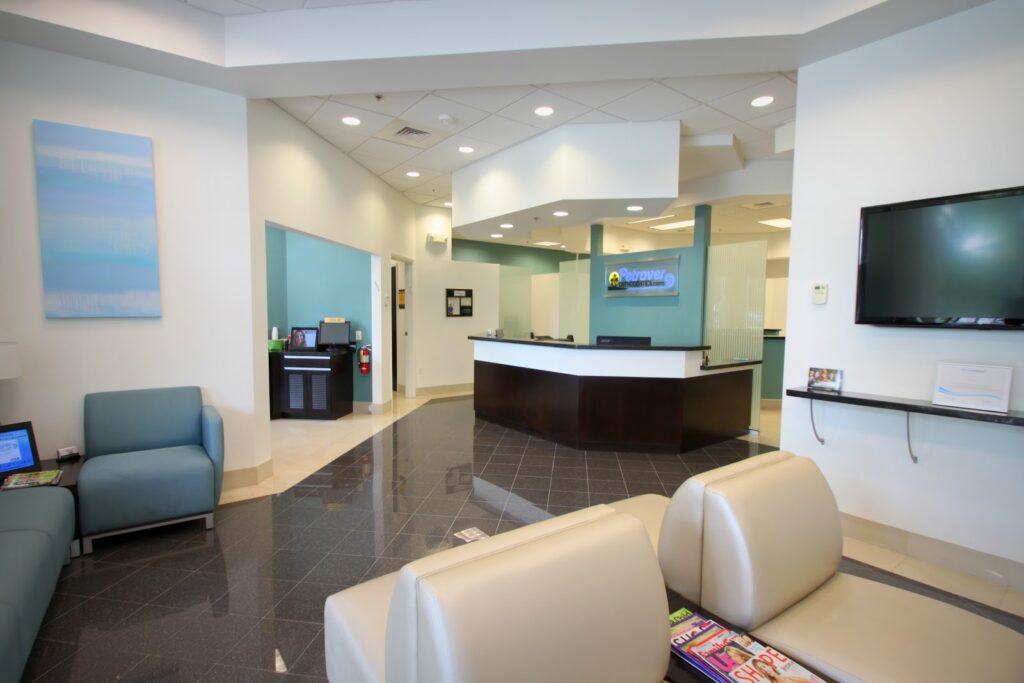
People asking about Invisalign in Wellington often fall into two groups. Adults who’ve thought about straightening their teeth quietly for years and have finally decided to ask the question out loud. And parents of a teenager who’ll happily wear a clear tray but won’t wear brackets on a soccer field at Village Park. Both start the same way here. You come in, we scan your teeth, and Dr. Petrover tells you whether aligners will actually do what you want them to do. If they won’t, he’ll say so and tell you what would get you the smile you’re after.
Why Wellington Patients Choose Petrover Orthodontics for Invisalign
Who is Dr. Petrover?
Dr. Jonathan Petrover has worked as a specialist in orthodontics for more than 20 years. He’s a member of the American Association of Orthodontists, the Southern Association of Orthodontists, the South Florida Academy of Orthodontists and the Florida Association of Orthodontists. He also attends 12 to 18 continuing education courses a year.
He’s the orthodontist who plans your treatment. Over those years he’s treated thousands of patients at our two Palm Beach County offices. If you’d rather see who you’re dealing with first, you can meet the team before you book.
A specialist, not a side service
Plenty of general dentists offer aligners now. The American Association of Orthodontists explains that orthodontists, like other dental specialists, finish four years of dental school, then study their specialty full-time for two or more years in an accredited program. A dentist can offer aligners without being an orthodontist.
That matters more with Invisalign than people expect, because Invisalign makes the trays; it doesn’t design your treatment. Your orthodontist writes the prescription and plans every movement, and the trays get made to those specifications. If you want the longer version, we’ve written up what an orthodontist actually is.
You can also read what our patients say in their own words.
What Makes Invisalign at Our Office Different
Digital scans, not putty trays
If your memory of orthodontics involves a tray of putty and the urge to gag, that part is gone. We take digital impressions with an iTero Scanner instead. It takes a few minutes, there’s nothing to swallow, and you watch 3D images of your own teeth build up on the screen while it happens. Comfort isn’t the only reason we switched. A more accurate model of your teeth gives Dr. Petrover a better starting point, because your aligners are planned from your scan.
Everything is included in your fee
Your fee here is one number, set before you start, and it covers:
- your diagnostic records
- the appliances you need throughout treatment
- your retainers at the end
- follow-up appointments
No add-on fees, and no invoice halfway through for something you’d assumed was already covered. It’s worth asking what a fee covers wherever you consult, so you’re comparing the same thing.
If an aligner breaks or goes missing
Call the office before you switch to your next tray, because moving on early can undo progress. We’ll tell you whether to go back to your previous aligner or come in for a replacement, and we’ll get you in as soon as we can. Our page on same-day help for a broken appliance covers what to do in the meantime.
How Invisalign Treatment Works, From First Scan to Retainer
What is Invisalign?
Invisalign is a system of clear, removable trays that move your teeth a little at a time. The American Association of Orthodontists describes clear aligners as thin plastic trays custom-formed to your mouth that sequentially apply the pressure needed to move teeth, and says they should be worn at least 22 hours a day. Each aligner is typically worn for a week or two, on the schedule Dr. Petrover sets. You take them out to eat, to drink anything other than water, and to brush and floss. There’s more on how Invisalign works at both our offices if you want the full picture.
What your first visit looks like
Your first visit is a free comprehensive consultation, a $249 value, at our Wellington office on South State Road 7. It includes an initial exam, digital x-rays and a full treatment consultation with Dr. Petrover. We’ll take a scan, and he’ll look at your bite and go through what he sees on the 3D images of your own teeth before you’ve committed to anything. You’ll leave knowing whether aligners suit your case, what the alternatives are, and the fee for your own plan.
Day to day in your aligners
The trays do nothing in a drawer. That’s the whole deal with Invisalign: it asks you to keep them in for all but a couple of hours of the day and take them out only for meals and brushing, and in exchange they’re hard to spot. Each new tray can feel tight for the first couple of days, then that fades. You’ll swap to each new set when he says to, and come in every so often so he can check the teeth are tracking the way the plan says they should. If they’ve drifted off it, he’d rather find out at a check-in than at the end.
After your aligners: retainers
Teeth drift back toward where they started if nothing holds them, so treatment doesn’t finish when the last tray comes out. You’ll be fitted with the retainer that holds your result. We’ll show you how long to wear it and how to look after it, and if one cracks or goes missing, call us.
Ready to start your smile?
We’ll show you your best options, with no surprises and no pressure.
Prefer to call our Wellington office?
(561) 795-3055
Monday to Thursday, 8am to 5pm
2465 S State Road 7, Suite 600
Is Invisalign Right for You, and What Does It Cost?
Who Invisalign works well for
Aligners can treat gapped teeth, crowded teeth, overbite, underbite, open bite, crossbite and crooked teeth, depending on how severe they are, though they aren’t right for everyone. In practice, the people who do well with them are the ones who’ll actually keep them in. Age isn’t the barrier people assume it is. Healthy teeth can be moved at any age, though adult treatment can need more planning or take longer, and we treat patients in their 60s and 70s. There’s more on adult orthodontics in Wellington if that’s you. For younger patients, orthodontics for kids and teens in Wellington covers what changes while the jaw is still growing.
When braces may be the better choice
Aligners aren’t automatically the right answer. The American Association of Orthodontists notes that braces can treat most orthodontic problems. Clear aligners are effective for many issues, but suitability is case-dependent. Dr. Petrover will recommend the right option at your consultation.
| Option | Who it tends to suit | How visible | Removable |
|---|---|---|---|
| Invisalign clear aligners | Adults and older teens who want a removable option and will wear it as instructed. | Nearly invisible | Yes |
| Metal braces | Complex bites, and anyone who’d rather not have to remember anything. | Visible | No |
| Ceramic braces | Teens and adults who want fixed braces that don’t show much. | Tooth-colored, low-key | No |
| In-Ovation self-ligating braces | Available here as a fixed option; the wire sits in a built-in clip rather than elastic ties. | Visible in metal; more discreet in clear ceramic | No |
If you’re weighing them, how the braces options compare walks through each one.
What Invisalign costs, and how insurance fits
There’s no single price for Invisalign. The fee tracks how far your teeth have to move and how long you’ll be in treatment. Our cost of treatment page publishes the payment structures below as a rough guide.
| Treatment | Orthodontic Benefits in one’s Dental Insurance | Per month | Down payment |
|---|---|---|---|
| Comprehensive Treatment | without Orthodontic Benefits | $190 – $250 | $500 |
| Comprehensive Treatment | with $1500 of Orthodontic Benefits | $140 – $190 | $500 |
| Limited Treatment | without Orthodontic Benefits | $135 – $275 | $500 |
| Limited Treatment | with $1500 of Orthodontic Benefits | $20 – $150 | $500 |
Those are examples, not a quote. Yours gets set at the consultation, once there’s a plan to price. The AAO notes that dental plans with orthodontic coverage usually cover braces and clear aligners equally, though each plan is different, so it’s worth checking yours. We verify your benefit and file the claims for you. We work with most PPO plans, including:
- Aetna
- Cigna
- UnitedHealthcare
- Assurant
- Guardian
- MetLife
- Humana
- Delta Dental
- Solstice
There’s more detail on the insurance plans we file for patients.









Book your free consultation
You don’t need a referral. It’s fine to consult, go home and think about it for a few months before coming back. That’s normal, and we’d still rather you had the information.
You can also book your free consultation online whenever it suits you.
Read More About Invisalign, or Visit Our Wellington Office
Where to read more
We keep our full Invisalign FAQ for the questions patients actually ask us at the chair, from whether aligners really work to what happens if your dentist has told you you’re not a candidate. And rather than take our word for the results, you can read what Invisalign patients here have said about theirs.
Our office
Petrover Orthodontics, Wellington
2465 S State Road 7, Suite 600
Wellington, FL 33414
Phone: (561) 795-3055
Monday to Thursday, 8am to 5pm. Closed Friday.
Get directions Call (561) 795-3055
Jill, Dr. Petrover’s wife, painted the artwork for our Wellington office. The themes Wellington patients mention most in their reviews include the welcoming staff, how comfortable the office feels and thorough explanations.
There’s more about the practice on the page for our Wellington orthodontic office, and if the drive south suits you better, we see patients at our Boynton Beach office too.
Google reviews of our Wellington office
Wellington Invisalign FAQs
What is the average cost of Invisalign in Florida?
What disqualifies you from getting Invisalign?
What is the 30 minute rule with Invisalign?
What are the downsides of wearing Invisalign?
How long does Invisalign last?
This page is general information about orthodontic treatment, not medical or dental advice, and reading it doesn’t create a doctor-patient relationship. Results vary, and whether Invisalign suits you can only be decided after an in-person exam. Any figures shown are the payment examples published on our cost of treatment page, not a quote. Please speak with Dr. Petrover or another qualified orthodontist about your own care.
THE PATIENT AND ANY OTHER PERSON RESPONSIBLE FOR PAYMENT HAS A RIGHT TO REFUSE TO PAY, CANCEL PAYMENT, OR BE REIMBURSED FOR PAYMENT FOR ANY OTHER SERVICE, EXAMINATION, OR TREATMENT THAT IS PERFORMED AS A RESULT OF AND WITHIN 72 HOURS OF RESPONDING TO THE ADVERTISEMENT FOR THE FREE, DISCOUNTED FEE, OR REDUCED FEE SERVICE, EXAMINATION, OR TREATMENT.